
When something unexpected happens, such as an evacuation, a sudden trip to the emergency clinic, or a last-minute pet sitter, the hardest part is often finding the right information fast. Where is the microchip number? Which medication is your cat on, and how much? Who is your backup caregiver? A pet emergency binder puts those answers in one place you can grab on the way out the door.
Here is a practical, step-by-step way to build one, plus what to put in it.
Step 1: Start with identification
Begin with the basics that help someone identify your pet and prove they are yours:
- A pet profile for each animal: name, species, breed, color, markings, age and a recent photo
- Microchip number and the registry it is registered with
- License or registration details
If you have more than one pet, give each one its own profile page so details never get mixed up.
Step 2: Add your vet and medical records
Next, record the information a vet, sitter or shelter would need:
- Your regular veterinarian and the nearest emergency animal hospital, with phone numbers and addresses
- Vaccination records
- Allergies and sensitivities
- Current medications, written exactly as your veterinarian directed
- Feeding instructions: food, amounts and schedule
A binder like this is an organizer, not a source of medical advice. Record what your veterinarian tells you, and call your vet or an emergency animal hospital when something is wrong.
Step 3: Write down your emergency plan
A plan is much easier to follow if it is already on paper. Many preparedness guides, including CDC pet preparedness guidance, move through the same stages: identification, a plan, a go-bag kit, sheltering in place and finding a lost pet. Organizing your binder in that order makes it easy to flip to the right section under stress.
- Emergency contacts and backup caregivers who can step in if you can’t get home
- An evacuation plan: where you would go and how you would transport your pets
- A shelter-in-place plan for when leaving isn’t an option
Step 4: Build a go-bag checklist
A checklist keeps your pet go-bag stocked and up to date. Write down what your pets need for a few days away from home, such as food, water, medications, leashes or carriers, and copies of their records. Check items off when you pack and review the list from time to time.
Step 5: Prepare a lost-pet action checklist
If a pet goes missing, a written checklist of what to do and who to call helps you act quickly instead of trying to remember everything at once. Keep a recent photo and the microchip details right beside it.
Step 6: Make a handoff pack for sitters
Whenever someone else cares for your pets, they need your routine as well as the emergency info: feeding, walks, litter, quirks and who to call. A separate sitter handoff section means you can pass along what they need without handing over the whole binder.
Step 7: Add cards for your wallet and front door
Small printed cards make your plan portable. A wallet card saying you have pets at home tells others your pets need care if you can’t get back. A “Pets Inside” notice on a window or door, and ID tags on carriers, help too.
Tips for keeping your binder useful
- Choose fillable pages if you prefer to type and save, then print a fresh copy whenever details change
- Use low-ink pages with large writing lines so they are easy to fill in by hand
- Keep the binder somewhere everyone in the household knows about, close to your go-bag
- Review it whenever there is a vet visit, a new medication or a change in contacts
A ready-made option: Pet Paw Safekeep
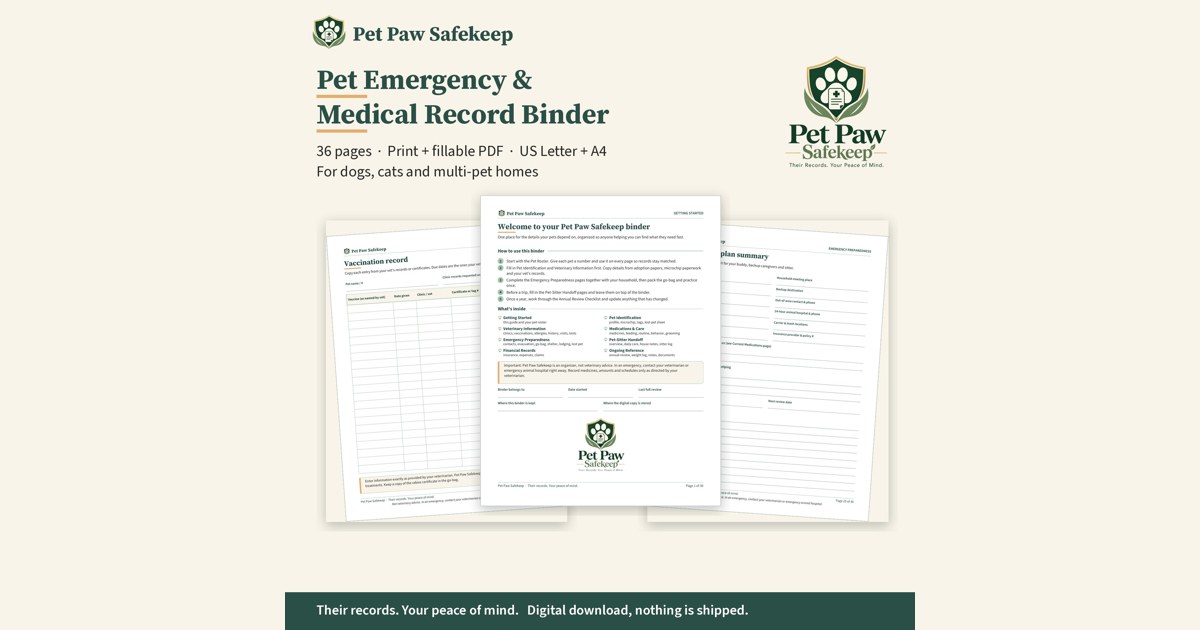
If you would rather not design every page yourself, Pet Paw Safekeep is a printable and fillable Pet Emergency & Medical Record Kit, available as an instant digital download in US Letter and A4. Its emergency pages follow the order described above.
- Starter ($6.99): 12 fillable pages covering the pet profile, microchip, vet contacts, vaccines, allergies, medications, feeding, emergency contacts, evacuation plan, go-bag and lost-pet checklists, and an emergency plan summary.
- Complete ($14.99): the 36-page binder in print and fillable versions, emergency cards (wallet ID, “I have pets at home”, “Pets Inside” notice, carrier ID tags) and a 7-page pet-sitter handoff pack.
- Ultimate ($24.99): everything in Complete, plus an Excel health tracker for up to 10 pets, 8 pages of dog and cat specialty inserts, and a fictional example packet showing filled-in pages.
Whichever route you choose, the best pet emergency binder is the one you actually fill in. Start with identification and vet contacts today, then add the rest one section at a time. Compare the Pet Paw Safekeep kits.