
For most first businesses, a small budget is not the real obstacle. The real obstacle is spending it in the wrong order: a logo, a website and a box of inventory before a single person has agreed to buy. When the money runs out, there is nothing to show for it.
With $500 or less, the order you do things in matters more than the amount. This post walks through a six-step approach for new entrepreneurs who want to start something real without loans or big risks. It works for service businesses, simple products and digital offers, whether you already have an idea or still need to pick one.
Please note: this is general business-planning information, not financial, tax or legal advice. Business registration, licensing and tax rules differ by location. Confirm what applies to you with your local authority or a qualified professional before you launch.
Step 1: Pick an Idea That Fits a Small Budget
Low-cost businesses usually sell a skill, a service, or a simple product made to order. The best small-budget ideas share one feature: you can take payment before you buy supplies. That way the customer’s money, not your savings, pays for the materials.
When you list possible ideas, look in these places:
- Skills you already have that people pay for
- Problems you hear friends, neighbors or local businesses complain about
- Ideas with low or no inventory
- Ideas you could deliver this month
Score each idea honestly against those points. A service you can sell next week beats a perfect product you might launch in six months.
Step 2: Test Demand Before You Spend
This is the step that protects your $500. Before you buy anything beyond the basics, describe your offer in two sentences with a price, and show it to real potential customers.
- Write a one-paragraph offer that includes a price
- Share it with about 20 people who fit your target customer
- Ask for a deposit or a booking, not an opinion
- Record every response in a simple log
Compliments are not demand
“That’s a great idea!” costs the person nothing to say. A pre-order, a deposit or a booked appointment is the strongest signal you can get, and compliments are the weakest. If nobody will commit even a small amount, adjust the offer, the price or the audience and test again before you spend.
Step 3: Plan Every Dollar
Split your budget into must-haves and nice-to-haves. Must-haves are the things that let you deliver the product legally and get paid. Everything else can wait until sales justify it.
A simple way to divide a small budget:
- Must-have setup: any required registrations or licenses in your area, and a simple way to take payments
- First supplies: only for orders you actually have
- Marketing: business cards, flyers and small tests
- Reserve: at least 10 to 20 percent of the budget, kept aside for surprises
That reserve is what keeps one unexpected cost from ending the business. Spending the entire budget on day one, with nothing held back, is one of the most common ways a small start fails.
Step 4: Set Up the Basics Properly
Check with your city, county and state about registering a business name, licenses, permits and sales tax. Requirements vary widely, so look up the rules where you are rather than relying on what someone in another state did. If you sell physical goods, ask specifically about sales tax collection.
Two habits to start on day one:
- Keep business money separate. Open a separate account, or at least keep a separate ledger, so business and personal money never mix.
- Save every receipt. It makes tracking, and any later conversation with a tax professional, much simpler.
If you are not sure which offices to contact, your local small business development center or public library can often point you in the right direction for free.
Step 5: Get Your First Sales With Free and Cheap Marketing
You do not need an ad budget to find your first customers. Start with the people and places you already have access to, and tell them clearly what you sell and who it is for.
- Message about 30 people personally about your offer
- Create free business listings and social media profiles
- Print a small batch of business cards or flyers
- Offer a thank-you for referrals
- Post photos of your work, with the customer’s permission
A short run of cards or flyers is one of the few marketing costs that almost every local business can justify early on. Keep the design simple: what you do, who it is for, and how to book or buy. For a step-by-step outreach plan, see How to Get Your First 10 Paying Customers.
Step 6: Track, Reinvest and Decide What’s Next
Every week, compare money in with money out. Note which marketing actually produced customers, and reinvest only in what produced sales. This is how a $500 start grows without new savings going in.
Set a 90-day decision date when you begin. When it arrives, look at your numbers and decide honestly whether to grow the idea, change it, or stop and try another one. Stopping a weak idea at 90 days with part of your reserve left is a far better outcome than slowly draining the budget for a year.
When you are ready to look closer at whether the business is actually making money after all costs, How to Calculate Your Real Business Profit picks up where this leaves off.
Common Mistakes to Avoid
- Buying branding and inventory before testing demand
- Counting compliments as demand
- Spending the whole budget with no reserve
- Mixing business and personal money
- Skipping local registration checks
Get the Full $500 Business Startup Guide
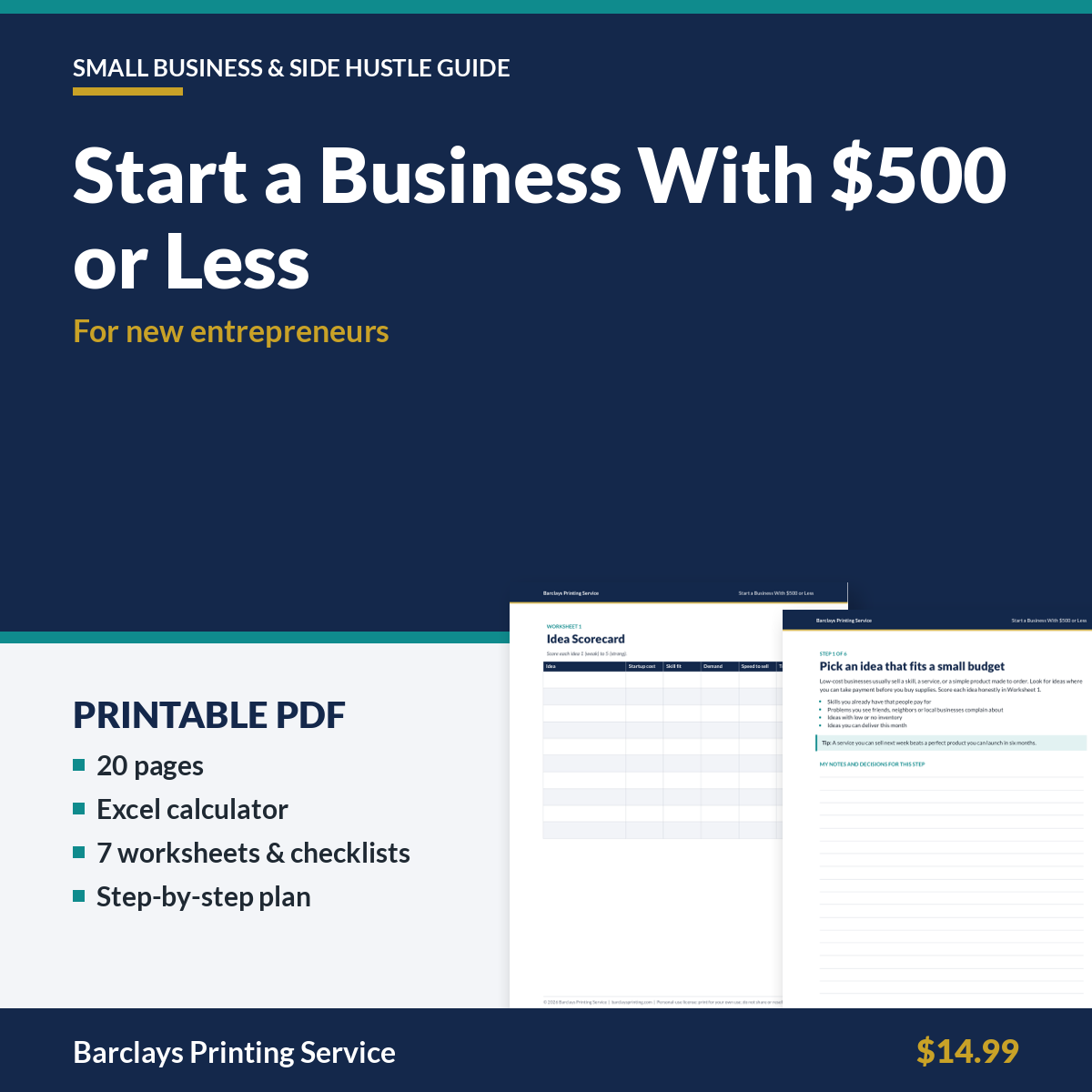
Start a Business With $500 or Less is a 20-page printable PDF guide for $14.99, with a companion Excel workbook for your budget and weekly money tracking. It includes 7 worksheets and checklists: Idea Scorecard, My Offer in Two Sentences, Demand Test Log, $500 Budget Plan, Setup Checklist, Weekly Money Tracker and 90-Day Decision Review, plus a personal action plan. It is an instant digital download; no physical item ships.