
A spare room can become a source of extra income, whether you host travelers for a night or two or someone staying for a few months. But a room that’s fine for visiting family isn’t automatically ready for paying guests. People who pay to stay judge a room on a handful of things: is it clean, is it quiet, can they sleep well, do they have privacy, and do they know what’s expected of them? You don’t need luxury. You do need every detail to feel intentional.
This post walks homeowners through how to prepare a spare room for paying guests, from checking the rules before you spend anything, to setting up for comfort and safety, to writing house rules and doing a final walkthrough before your first guest arrives.
Important: this is general information, not legal, tax or real-estate advice. Landlord, zoning, licensing, insurance and tax rules differ by location. Check with your local authority and qualified professionals before acting.
Step 1: Check Rules and Permissions First
Before you buy a single pillow, find out what applies where you live. Short-term rental rules, registration, taxes, zoning, HOA or building rules, lease terms and insurance can all affect whether and how you can host.
- City or county rules for short-term and room rentals
- HOA, condo, co-op or landlord permission
- Insurance coverage for paying guests (ask your insurer directly)
- Occupancy and lodging tax obligations
- Your mortgage or lease terms
Write down who you spoke to and the date of each conversation. Rules change, so recheck them at least once a year. This step can feel like a hurdle, but it’s far cheaper to learn about a restriction now than after you have furnished the room and taken bookings.
Step 2: Decide Your Hosting Style
Short stays and longer stays are different experiences. Short stays bring more turnover and cleaning. Longer stays mean fewer guests but more shared-living considerations, because someone staying for weeks will use your kitchen, laundry and living space more than an overnight traveler. Decide:
- Whether you’ll offer short stays, mid-term stays or both
- Which shared spaces guests may use
- Which private spaces are off-limits
- Your quiet hours and guest limits
Being clear about this now shapes everything else: what you buy for the room, what your house rules say and which guests your listing attracts.
Step 3: Set Up the Room for Real Comfort
Sleep quality matters most. Before you think about décor, invest in the bed.
- A quality mattress and a mattress protector
- Two full sets of bedding and towels, so one set can be washed while the other is in use
- Blackout curtains or shades
- Closet space, hangers and a spot for luggage
- A desk or table, a chair and a lamp
- Outlets or charging near the bed
A simple room checklist by area
- Sleep: mattress, protector, pillows, two bedding sets
- Storage: closet space, hangers, drawers
- Work: desk, chair, lamp, outlets
- Comfort: fan or heater, mirror, wastebasket
Small touches make the room feel thought through: a framed welcome sign, a printed Wi-Fi card on the desk, or a neat card explaining how the heater works. These are inexpensive and save guests from having to message you for basics.
Step 4: Cover Safety and Privacy
Paying guests need to feel safe in your home, and you need your own belongings protected.
- Working smoke and carbon monoxide alarms where required or recommended, tested
- A fire extinguisher and first-aid kit that are easy to reach
- A clear exit route and a nightlight
- A lock on the guest room door
- Valuables and important documents locked away
- A separate guest Wi-Fi network, if possible
Never place cameras in guest rooms or bathrooms. Check your platform’s rules and local rules on any security device in your home, and disclose devices as required.
Step 5: Write House Rules and a Guest Guide
Clear expectations prevent most problems. Keep your rules short and friendly, and share them before anyone books so guests can decide whether your home suits them. Cover:
- Check-in and check-out times
- Quiet hours, visitors, smoking and pets
- Kitchen and laundry use
- Parking and entry instructions
- How to reach you
A short printed guest guide in the room works alongside your listing. It answers the questions guests have once they’re settled in, like which shelf in the fridge is theirs or when the laundry is free, without them needing to knock on your door.
Step 6: Inspect and Prepare Your Pricing
Before your first guest, look at the room the way they will.
- Sleep in the room yourself for a night
- Fix anything noisy, broken or uncomfortable
- Photograph the room in daylight
- Estimate your cost per night before setting a price
Sleeping there is the single best test. You’ll notice the streetlight through the curtains, the squeaky floorboard, the missing hook for a towel or the outlet that’s too far from the bed. Then gather the information you need to price: supplies, cleaning time, your share of utilities and any platform fees. Knowing your cost per night keeps you from setting a price that looks good but leaves little after expenses.
Common Mistakes to Avoid
- Hosting before checking local rules, HOA and insurance
- Buying décor before investing in sleep quality
- Unclear rules about shared spaces
- Leaving valuables and documents accessible
- Never sleeping in the room yourself
If you’re planning to list a whole home or apartment rather than a single room, our First-Time Airbnb Host Setup Checklist covers that larger setup phase by phase.
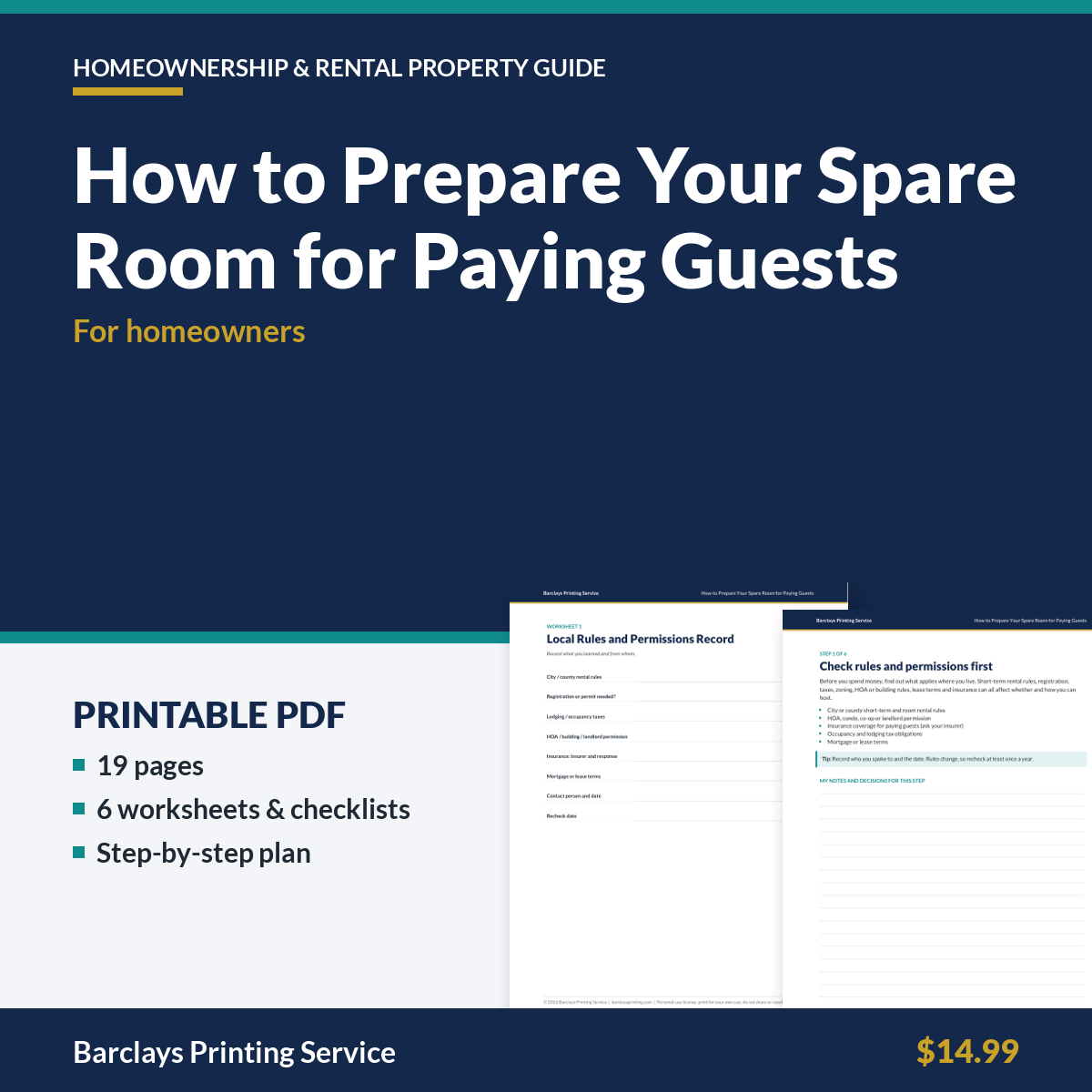
Get the Printable Spare Room Guide
Our How to Prepare Your Spare Room for Paying Guests guide is a 19-page printable PDF for homeowners, priced at $14.99. It includes a Local Rules and Permissions Record, a Hosting Style Planner, a Room Setup Shopping List, a Safety and Privacy Checklist, a House Rules Draft and a Guest-Ready Inspection checklist, plus a personal action plan. It’s an instant digital download you can print and fill in as you get the room ready.