
Many new homeowners only find out what a house needs when something stops working: a gutter overflows in a storm, a smoke alarm starts chirping in the middle of the night, or the cabinet under the sink smells damp. When maintenance happens only in emergencies, it tends to happen at the worst time, under pressure and often at a higher cost. A simple calendar changes that. It spreads routine checks across the year so no single month is overwhelming, and it leaves you with a record of what was done and when.
This post walks homeowners through a six-step way to build a home maintenance calendar, from learning where your home’s main systems are to keeping records you can use for warranties, budgeting and an eventual sale.
Important: this is general home-care information, not a substitute for a licensed inspector, electrician, plumber or other qualified tradesperson. Follow your equipment manufacturers’ instructions, and call a qualified professional for repairs or anything that seems unsafe.
Step 1: Get to Know Your Home’s Systems
Before you can schedule anything, you need to know what you have and where it is. Walk through the house with a flashlight and your phone, and find each of these:
- The main water shut-off
- The electrical panel, with the breakers labeled
- The gas meter and shut-off, if your home has gas
- The HVAC system and the size of its filter
- The water heater, including its type and age
- The roof and gutter layout
Record ages and model numbers wherever they are visible, and take a photo of each label and model plate. This pays off twice. It helps you plan, because an older water heater or HVAC unit belongs on your radar sooner than a new one. And it speeds up any repair call, because you can tell a technician exactly what you have before they arrive.
The water shut-off deserves extra attention. If a pipe or supply line fails, knowing where to turn off the water, and making sure everyone in the household knows too, can be the difference between a quick mop-up and a much bigger problem.
Step 2: Set Up Monthly Quick Checks
Some checks take only minutes and catch problems early. Pick one day each month, such as the first Saturday, and walk through the same short list:
- Test smoke and carbon monoxide alarms, following the device instructions
- Check the HVAC filter and replace it as directed
- Look under sinks for drips, stains or damp
- Run water in fixtures you rarely use, such as a guest bathroom
- Look for signs of pests or moisture
Keep a simple log: months down the side, one column per check, and a tick when it is done. If you skip a month, you will see it.
Step 3: Plan Your Seasonal Tasks
Each season brings its own work. Here is a practical way to group it.
Spring: Water and Exterior After Winter
Clean gutters and downspouts, walk around the outside looking at siding, foundation and roof, have the air conditioning serviced, check windows and screens, test the sump pump if you have one, and check outdoor faucets.
Summer: Cooling, Outdoor Areas and Pests
Inspect the deck, patio and railings, trim plants back from the house, check for pests, clean the dryer vent and check attic ventilation.
Fall: Heating Prep, Gutters and Drafts
Clean the gutters again after the leaves fall, have the heating system serviced, seal drafts around doors and windows, check weatherstripping, test alarms and replace batteries as directed, and drain and protect outdoor faucets if you get freezing weather.
Winter: Freeze Protection and Indoor Checks
Protect pipes from freezing where needed, check the attic for leaks or condensation, inspect the caulking in bathrooms, watch for ice dams if they happen where you live, and review your maintenance budget for the year ahead.
Adjust all of this to your climate. A home in a cold, hot, rainy or hurricane-prone area will have different priorities, and treating every climate the same is a common mistake. Use the seasons as a starting framework, then move each task to the month that makes sense for your home.
Step 4: Add Annual and Multi-Year Tasks
Some items need attention once a year or every few years:
- Professional HVAC service
- Water heater checks, following the manufacturer’s guidance
- Dryer vent cleaning
- Roof inspection
- Chimney inspection, if you have one
- Re-caulking tubs and windows as needed
The right interval depends on your equipment and conditions, so check your manuals and ask the professionals who service your systems how often they recommend it. Then write each task into a specific month on your annual calendar, with a note on whether it needs a pro. Spreading these out keeps any one month from becoming crowded or expensive.
Step 5: Plan a Maintenance Budget
A home costs money to maintain even when nothing breaks, and repairs rarely arrive on a convenient schedule. Setting money aside every month means a repair is a planned expense instead of a surprise. To build your number, think about three things:
- A monthly maintenance savings amount
- Annual service costs, such as HVAC tune-ups or any gutter cleaning you hire out
- Replacement planning for older systems, using the ages you recorded in Step 1
There is no single right figure for every home. Start with your best estimate, track what you actually spend during the year, and refine it. After a year or two of records, your budget is based on your own house rather than a guess.
Step 6: Keep Records
Record every task, repair, contractor and receipt. For each job, note the date, what was done, who did it and what it cost. Keep manuals and warranty paperwork together in one folder, physical or digital. Good records help with warranty claims, give future buyers a clear history of the home, and make next year’s budget easier to set.
Build a trusted contractor list as you go, too: plumber, electrician, HVAC, roofer, handyperson, pest control, landscaper and appliance repair, each with a phone number and a note on whether you checked their license. When a repair grows into a real project, our How to Prepare Your Home for a Contractor guide covers getting your scope, your space and your paperwork ready before work begins.
Common Mistakes to Avoid
- Not knowing where the water shut-off is
- Forgetting filters and alarm tests
- Treating all climates the same
- Not saving for repairs
- Keeping no records of work done
Get the Printable Home Maintenance Calendar
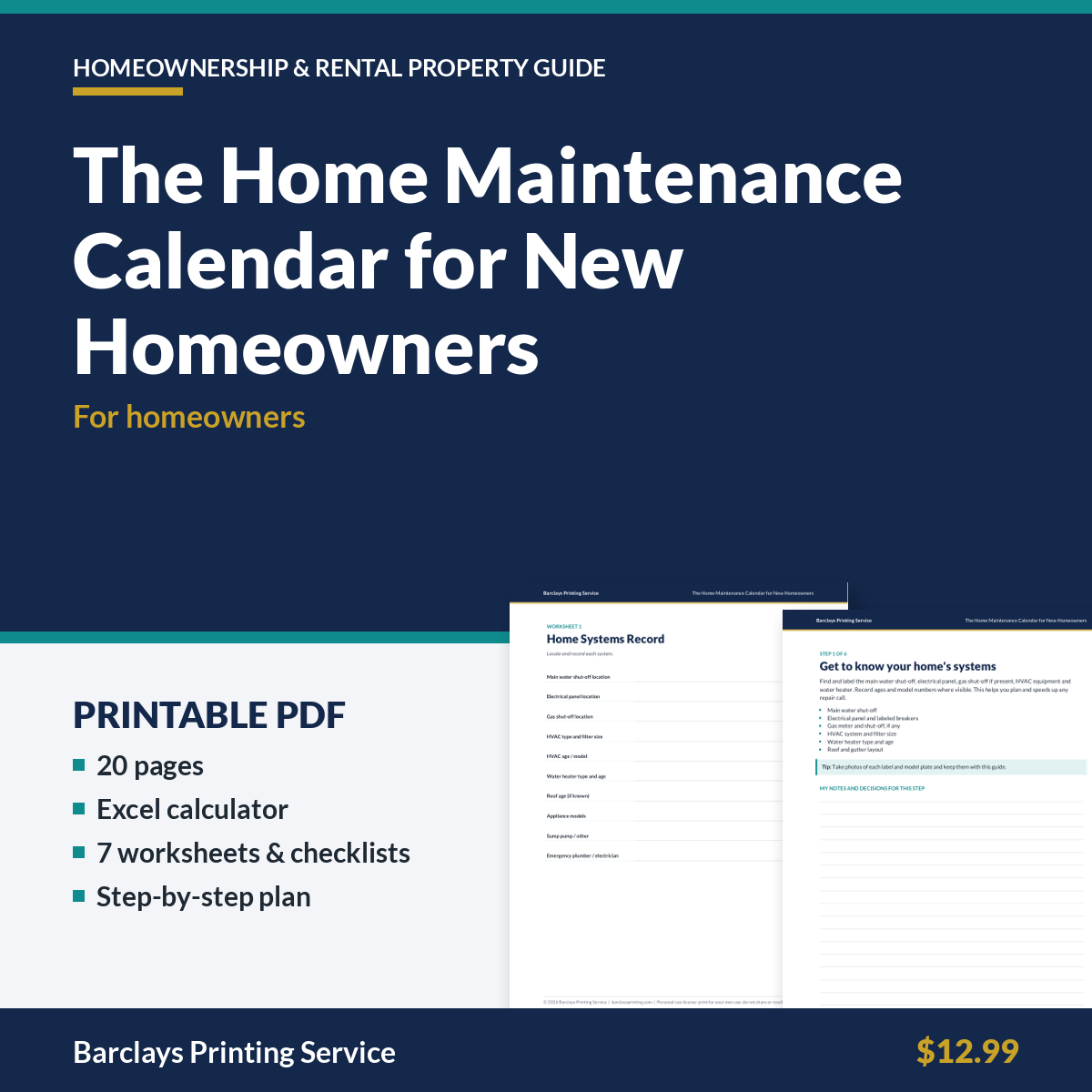
Our The Home Maintenance Calendar for New Homeowners guide is a 20-page printable PDF for homeowners, priced at $12.99. It includes a Home Systems Record, a Monthly Checks Log, Spring and Summer Tasks and Fall and Winter Tasks checklists, a My Annual Maintenance Calendar page, a Maintenance and Repair Record and a Trusted Contractor List, plus a personal action plan and an Excel calculator. It’s an instant digital download you can print and keep in your home binder.