
Traveling nurses, contractors, consultants, interns and relocating employees often need a furnished place for a month or more. For hosts, these mid-term stays can mean fewer turnovers and guests who settle in for a while. But they need a different approach from nightly rentals: a space built for both rest and work, monthly pricing, clear written terms, consistent screening and communication that respects a guest who is busy working.
Traveling professionals usually want three things: a comfortable, quiet place to rest after long shifts, a reliable workspace and internet connection, and a straightforward booking with clear terms. This post walks mid-term rental hosts through a six-step plan to rent to traveling professionals, from checking the rules for 30-plus day stays to managing move-out.
Important: this is general information, not legal, tax or real-estate advice. Landlord, zoning, licensing, insurance and tax rules differ by location. Check with your local authority and qualified professionals before acting.
Step 1: Check the Rules for 30-Plus Day Stays
Do not assume the rules you follow for short-term rentals apply to monthly stays. In many places, stays of a month or more are treated differently and may create tenant rights. Research your local situation before you list, and write down what you find:
- When a guest becomes a tenant under local law
- Lease or agreement requirements
- Deposit, notice and entry rules
- Taxes and any registration requirements
- HOA or building rules
- Insurance coverage for mid-term stays
Note the date you checked each item and who you spoke to, because rules change. Consider having a local attorney review your agreement template before your first guest signs it.
Step 2: Set Up a Work-Ready Space
Design for rest and work. Blackout curtains and quiet matter to shift workers. A real desk, a comfortable chair, good lighting and strong Wi-Fi matter to remote workers. A kitchen table and a spotty connection may be fine for a weekend, but not for a month of shifts or video calls.
Rest
- A quality mattress and mattress protector
- Blackout curtains and a white-noise option
- Set quiet hours
Work
- A desk, an ergonomic chair and a desk lamp
- High-speed Wi-Fi, tested from the desk itself
- Outlets near the desk
Living
- An equipped kitchen or kitchenette
- Washer and dryer access
- Parking and secure entry
- Storage for luggage and work gear
Different guests value different things. Shift workers often look for a dark, quiet bedroom and flexible check-in. Remote workers look for the desk, chair and connection. Contractors tend to care about parking, laundry and storage, and relocating staff often want a full kitchen and some flexibility on dates. Knowing who is likely to book helps you decide where to spend first.
Step 3: Price for Monthly Stays
A monthly price should cover your real costs, not just match a nightly rate multiplied by thirty. Build a cost floor first, then compare it with local furnished monthly listings.
- Your mortgage or rent share, utilities, internet and insurance
- Cleaning between stays and any mid-stay cleaning
- Supplies and furniture wear
- Listing fees and taxes
- A vacancy allowance for the gaps between guests
Decide what’s included in the price, such as utilities, internet and cleaning, and set clear terms for mid-stay cleaning. For a step-by-step look at building a cost floor and researching comparables, see our post on how to price a furnished room for monthly rentals.
Step 4: List Where Professionals Search
Use platforms that support monthly stays, and consider local networks where appropriate, such as nearby hospitals’ housing resources, employers and relocation contacts. Then write the listing for a working guest, not a vacationer.
- Mention the workspace, internet, parking and quiet
- State commute times to major employers nearby
- Show a clear monthly price and what it includes
- Include photos of the workspace and the bedroom
A headline that names the desk, the Wi-Fi or the quiet bedroom speaks directly to the people you want to reach. Busy professionals are scanning many listings between shifts, so put the practical details where they can find them quickly.
Step 5: Screen Fairly and Use a Written Agreement
Write down your screening criteria and apply the same criteria to every applicant. Screening must follow fair housing laws: do not screen based on protected characteristics. Consistent written criteria protect you and treat every applicant the same way.
- Identity verification
- Employment or assignment confirmation
- Payment method and deposit
- Minimum stay and maximum occupants
- Pet and smoking policies
Use a signed written agreement before arrival that covers dates, price, deposits, utilities, house rules and what happens with an early departure. Then complete a move-in condition report, room by room, with photos: entry, living room, kitchen and appliances, bedroom and mattress, bathroom, workspace, windows, floors, walls, and keys or access. That record makes move-out far simpler for both of you.
Step 6: Manage the Stay Smoothly
Agree at the start on how you’ll communicate:
- The guest’s preferred contact method and hours
- How to make a maintenance request
- A mid-stay check-in and any mid-stay cleaning
- A move-out checklist and the deposit timeline
Respect the guest’s privacy and give notice before entering, as required by your agreement and local law. Someone working nights may be asleep at noon, so ask about their schedule before you plan a visit. A clear welcome book helps here too; our post on how to create a guest welcome book covers the house details guests need on their own schedule.
Common Mistakes to Avoid
- Assuming short-term rules apply to monthly stays
- Weak Wi-Fi or no real desk
- No written agreement
- Inconsistent screening
- No move-in condition record
Get the Printable Traveling Professionals Guide
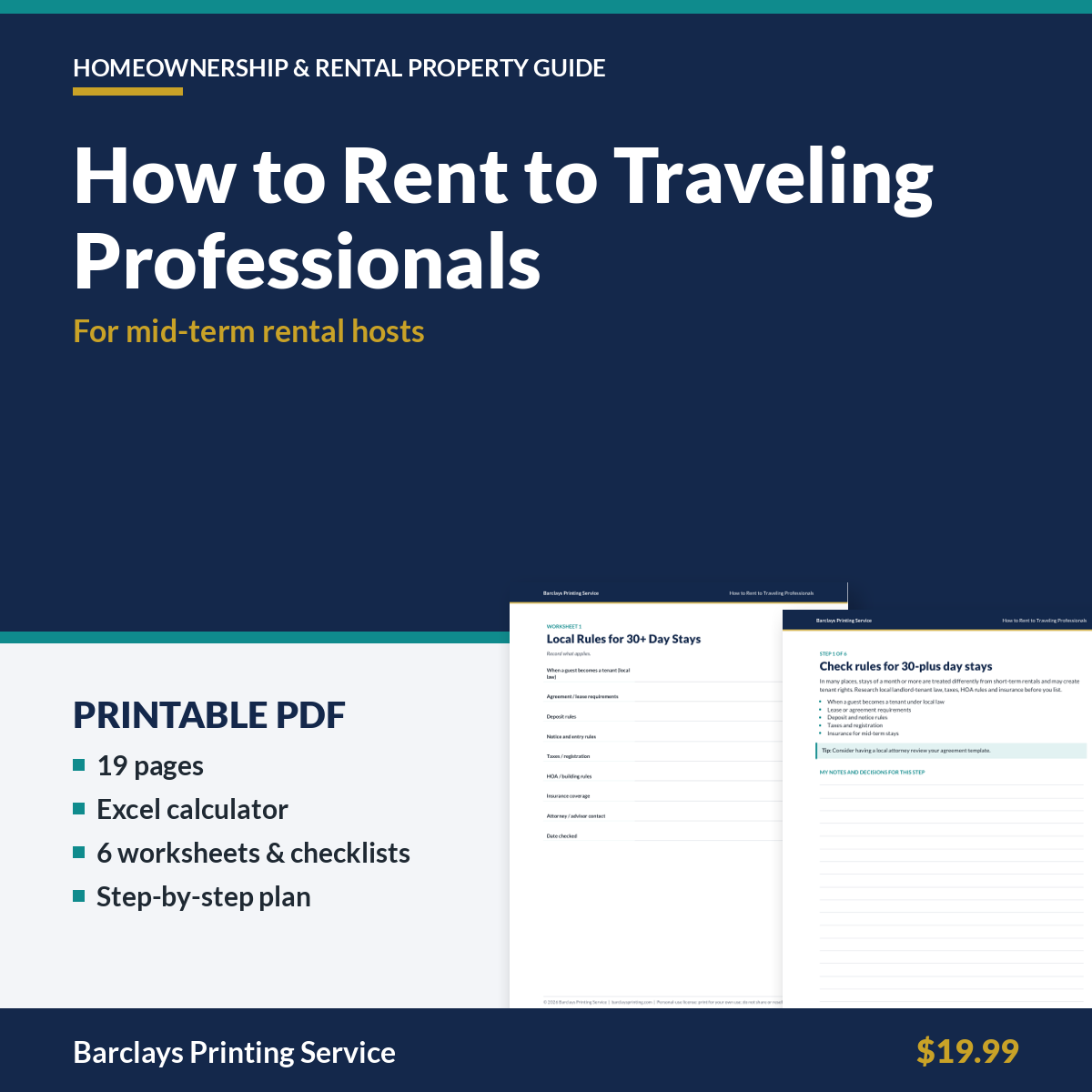
Our How to Rent to Traveling Professionals guide is a 19-page printable PDF for mid-term rental hosts, priced at $19.99. It includes a Local Rules for 30+ Day Stays worksheet, a Work-Ready Setup Checklist, a Monthly Cost and Price Sheet, a Listing Copy for Professionals worksheet, a Screening Criteria sheet and a Move-In / Move-Out Condition Report, plus a personal action plan and an Excel pricing calculator. It’s an instant digital download you can print and fill in as you set up your space.