
Fires, floods, storms and other emergencies can force a family to leave home with very little warning. When that happens, the hardest part often isn’t the leaving itself. It’s the minutes lost deciding what to take, where to go and how everyone will find each other, especially if family members are at school or work when it starts.
A family emergency evacuation binder brings your plan, contacts, checklists and key information together in one place so everyone knows what to do. It also helps you pack go-bags ahead of time, when you can think clearly. This post walks households through six steps to build one, whether you live alone, with children, with older relatives or with pets.
Please note: this post and the guide it’s based on are general preparedness information. Always follow official instructions from your national or local disaster management office and weather service. In an emergency, contact your local emergency services.
Step 1: Learn Your Local Risks and Alerts
Every area has different risks, so start by finding out which emergencies are likely where you live and how official alerts are sent. Use official sources, and write down:
- The common hazards in your area
- Your local emergency management office
- The official alert systems you’ve signed up for
- Your evacuation zone or routes, if your local authorities use them
- Where to find local shelter information
- Radio or TV stations for updates, and utility outage contacts
Add the date you checked. Zones, routes and sign-up methods can change, so this page is worth revisiting.
Step 2: Plan Routes and Meeting Places
Different emergencies call for different meeting points. Choose three:
- Near home: for a sudden emergency like a house fire, such as a specific neighbor’s mailbox or tree.
- In your neighborhood: for when you can’t return home.
- Out of area: friends, family or a shelter you’d go to if you have to evacuate the area.
Then plan two routes out of your area and mark them on a paper map. If one road is closed, you already know the alternative. Your plan should also say how you’ll travel, who picks up the children and who checks on relatives or neighbors who may need help.
Step 3: Set Up a Family Communication Plan
The most common assumption in family plans is that phones will work. During an emergency, phones and networks may fail or batteries may die. Build your plan around that:
- Choose an out-of-area contact everyone checks in with. It’s often easier to reach someone far away than someone across town.
- Write numbers on paper. Give each person a written phone list, since few of us remember numbers anymore.
- Use a text-first plan. Texts may get through when calls don’t.
- Know the school and workplace plans, so you know where children and adults will be sent.
A simple table with each person’s name, mobile, work or school, medical needs and check-in method keeps it all on one page.
Step 4: Prepare Go-Bags
Pack a bag for each person, and for pets, so you can leave without gathering anything. Follow your local authority’s recommended list too. The basics include:
- Water and non-perishable food
- Medications with a written list, and copies of prescriptions
- A first-aid kit and a whistle
- A flashlight, batteries, and a phone charger or power bank
- Copies of key documents
- Cash in small bills
- Clothing and sturdy shoes, glasses or contacts and hygiene items
- A comfort item, and baby supplies if needed
Check Bags Every Six Months
Go-bags with expired supplies are a common problem. Check them every six months and replace water, food, batteries and medications before they expire. For the documents, our post on how to organize important family documents explains how to make secure copies and keep a master index.
Step 5: Plan for Everyone, Including Pets
An evacuation plan has to work for every member of your household. Think about babies, older relatives, people with disabilities, medical equipment and pets:
- Medical equipment and power needs: what equipment goes with you and your power backup plan.
- Mobility and transport needs: mobility aids and how each person will travel.
- Care instructions and caregiver contacts for anyone who needs support.
- Pets: carrier or leash, food and water, medications, vaccination records and a photo of each pet.
Pets may not be allowed in all shelters, so identify pet-friendly destinations in advance. Our post on how to build a pet emergency binder goes into more detail on pet records.
Step 6: Practice and Review
A plan nobody has practiced is mostly a hope. Practice at least once or twice a year and time how long it takes to leave with your go-bags. After each drill, write down the date, the type of drill, the time it took and what to fix, then update the binder. Update it after any change too, such as a new phone number, medication or family member.
Write Your Leave-Home Quick Steps
Under pressure, a short list beats a long plan. Write down exactly what you’ll do if you have 5 minutes to leave and if you have 30 minutes. Note which utilities to deal with, only if you’re instructed to and it’s safe, and who calls the out-of-area contact. Keep this page at the front of the binder.
Common Mistakes to Avoid
- Assuming phones will work.
- No out-of-area contact.
- Go-bags with expired supplies.
- Forgetting pets and medical needs.
- Never practicing.
If you have young children, your babysitter should know the plan too. The Emergency Babysitter Information Kit keeps emergency contacts and house details in one place for any caregiver.
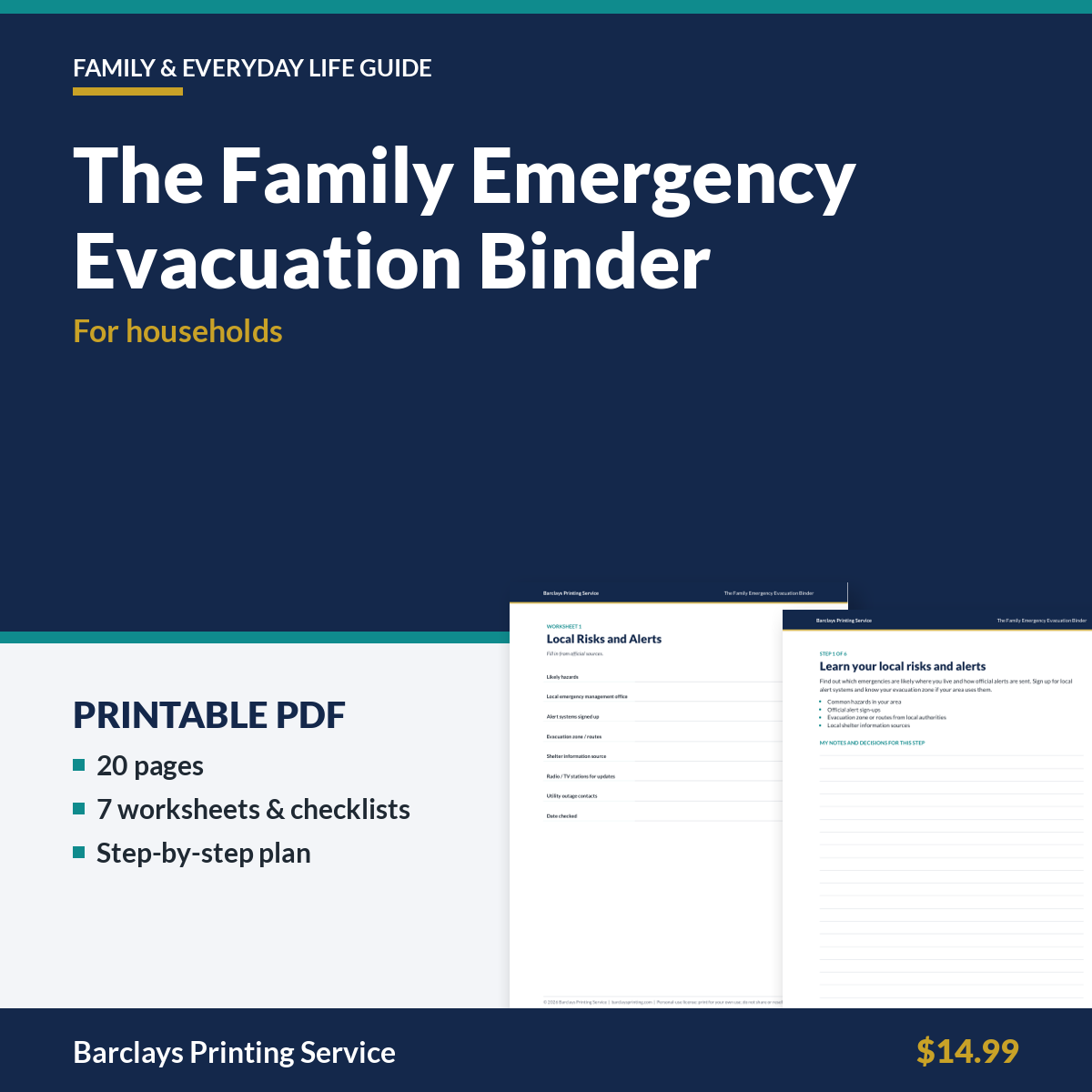
Get the Printable Evacuation Binder
Our Family Emergency Evacuation Binder is a 20-page printable PDF for households, priced at $14.99. It includes Local Risks and Alerts, Evacuation Plan and Family Communication Plan worksheets, a per-person Go-Bag Checklist, a Pets and Special Needs checklist, a Drill and Review Log and Leave-Home Quick Steps, plus a personal action plan. It’s an instant digital download you can print as many times as you need for your household. It is general preparedness information; always follow official instructions, and no specific outcome is promised.