
A school year brings a steady stream of permission slips, fee reminders, spelling tests, practice schedules and messages from more than one app. Most families keep up for the first few weeks. Then a form gets buried under the mail, a project is due tomorrow, and someone is running to the store for poster board at 8 p.m.
The fix isn’t working harder. It’s having one family hub: a calendar, a place for papers, a homework routine and a simple way to track activities and conversations with teachers. This post walks parents and guardians through six steps to set that hub up before school starts and keep it running all year, whether you’re managing one child or several, from kindergarten through high school.
Step 1: Set Up Before School Starts
The week or two before school is the easiest time to get organized, because nothing is overdue yet. Gather:
- The school calendar: add holidays, early dismissals, conference weeks and the first and last days to your family calendar.
- The supply list, and do the shopping before the rush.
- Teacher and office contacts, plus the counselor or support staff.
- Login details for school apps and portals, stored securely rather than on a sticky note.
Make a School Year Snapshot for Each Child
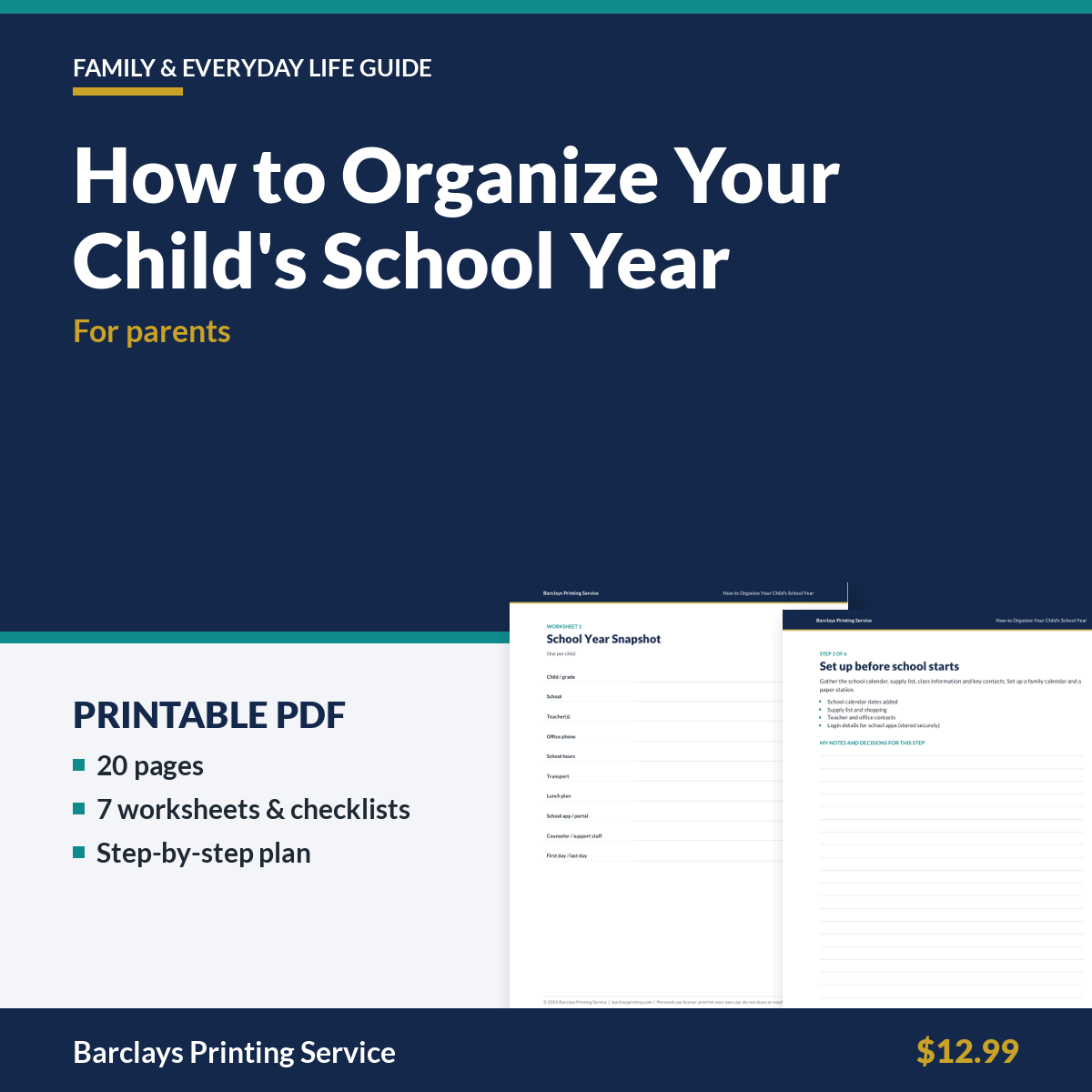
One page per child holds the basics: grade, school, teachers, office phone, school hours, transport, lunch plan, school app or portal, and the first and last days. When a grandparent is doing pickup or you need the office number fast, it’s all there.
Run a Back-to-School Checklist
Before day one, tick off supplies, clothes or uniform, calendar dates, completed forms, any required health forms and updated emergency contacts with the school. Don’t forget routines: adjust bedtime a little ahead of time, plan the morning routine and get the homework spot ready.
Step 2: Create a Family Command Center
A command center is simply one spot where school life lives, so everyone knows where things go. It has four parts:
- A calendar, wall or digital, with all dates in one view.
- An inbox tray for papers needing action, such as forms to sign.
- A launch pad near the door for bags, shoes and lunch.
- A binder for each child for records and trackers.
The calendar matters most. Several calendars that don’t match, one on the fridge, one in a parent’s phone and one in the school app, is one of the most common reasons things get missed. Pick one master calendar and copy everything into it.
Step 3: Manage Forms and Deadlines
Papers pile up when nobody checks them daily. Build in a 5-minute paper check, ideally at the same time each day, such as right after school or after dinner. For each paper, do one thing: sign it, return it, file it or recycle it.
Use a simple forms and fees tracker with columns for the form or fee, due date, amount, whether it’s done and whether you kept a copy. Keep copies of important forms, such as health forms or anything you signed for a trip, in the child’s binder. If you’re building a home filing system at the same time, our post on how to organize important family documents covers birth certificates, health records and other papers schools sometimes ask for.
Step 4: Build a Homework Routine
A consistent time and place for homework helps children settle in faster and helps you spot when something is off. Set up:
- A set homework time and place that stays the same most days.
- Supplies at the homework spot, so nobody wanders off looking for a pencil sharpener.
- A weekly assignment planner, one page per week, with rows for reading, math, science, social studies, language, other subjects, projects and tests across Monday to Friday.
Break Big Projects Into Steps
Most last-minute project panics come from treating a big project as one task. When a project is assigned, write down the due date, then the steps and a date for each, the materials needed and where your child will need help. Buying materials in week one instead of the night before is a small change that makes a big difference.
Step 5: Track Activities and Logistics
Sports, music, clubs and rehearsals add up quickly, especially with more than one child. Record each activity with its day and time, location, who does drop-off and pick-up, and the cost. Note gear too, so you aren’t surprised by a uniform or equipment fee.
If you share driving with other families, write the carpool plan down so everyone knows whose turn it is. And watch for overbooking. When you see the whole week on one page, it’s easier to notice when there’s no downtime left, and to protect some.
Step 6: Stay in Touch With Teachers
Many parents only contact a teacher when something has already gone wrong. Waiting until problems grow makes them harder to solve. Instead:
- Note each teacher’s contact preferences, such as email, the school app or notes home.
- Add conference dates to the master calendar.
- Keep a list of questions to raise as they come up.
- Keep a short communication log of important conversations: date, who you spoke with, the topic, the outcome and any follow-up.
A short, friendly note early in the year makes later conversations easier. Introducing yourself before there’s a concern sets a positive tone.
Common Mistakes to Avoid
- Papers piling up without a daily check.
- Several calendars that don’t match.
- No set homework spot.
- Overbooked activities.
- Waiting until problems grow to contact teachers.
With a younger child at home too? The Emergency Babysitter Information Kit gives sitters and grandparents routines and emergency details in one place, which pairs well with your school snapshot pages.
Get the Printable School Year Organizer
Our How to Organize Your Child’s School Year guide is a 20-page printable PDF for parents, priced at $12.99. It includes a School Year Snapshot, a Back-to-School Checklist, a Forms and Fees Tracker, a Weekly Homework Planner, an Activities and Carpool Schedule, a Teacher Communication Log and a Project Planner, plus a personal action plan. It’s an instant digital download you can print as many times as you need for your household, so you can make a set for each child. It offers practical methods and templates, and no specific outcome is promised.