
Getting the keys to your first apartment is exciting. Getting there involves more than finding a place you like: application fees, deposits, lease terms, utilities, furniture, moving day and what feels like a hundred small purchases. Miss one step and you can end up with surprise costs, a dispute over your deposit or a first night without a towel or toilet paper.
The move becomes much more manageable when you break it into phases with a checklist for each. This post walks young adults, students and anyone moving into their first place through six steps, from budgeting and touring to signing, packing, moving in and setting up your home.
Please note: this post and the guide it’s based on are general information, not legal or financial advice. Tenant rights, lease terms and deposit rules differ by location. Read your lease carefully, and check with your local housing authority or a qualified professional if you have questions.
Step 1: Budget for Moving and Monthly Costs
The most common first-apartment mistake is budgeting only for rent. Build two budgets instead.
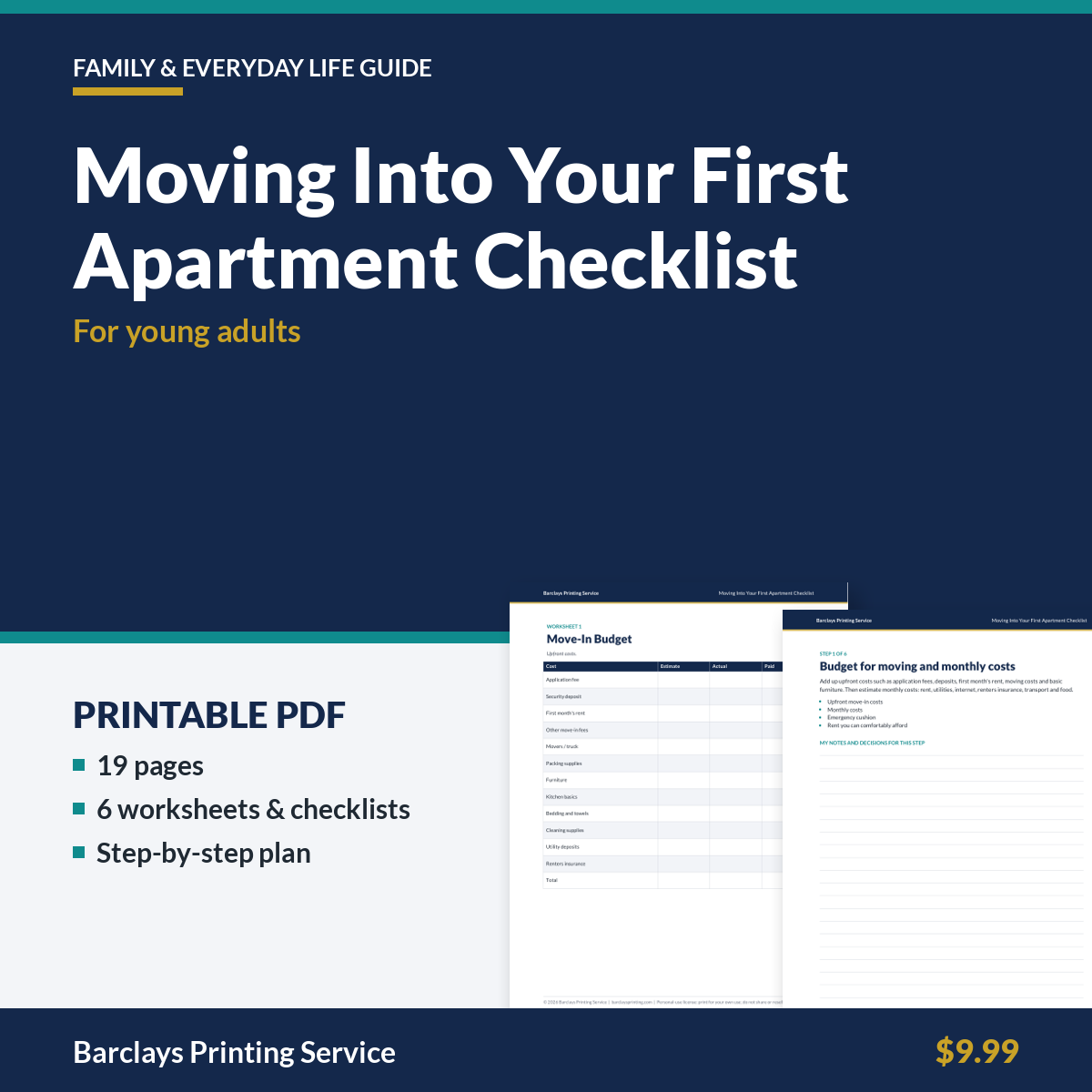
Your Move-In Budget
These are the upfront costs, many of them due before you get the keys. For each, write an estimate, then the actual amount and whether it’s paid:
- Application fee, security deposit, first month’s rent and any other move-in fees
- Movers or a truck, and packing supplies
- Furniture, kitchen basics, bedding and towels, and cleaning supplies
- Utility deposits and renters insurance
Your Monthly Budget
Next, estimate what living there will actually cost each month: rent, electric, gas, water, internet, phone, renters insurance, transport, groceries, personal spending and savings. Compare the total with your take-home pay and look at what’s left over. That’s how you find the rent you can comfortably afford, not just the rent you can technically pay. Leave room for an emergency cushion, too.
Step 2: Search and Tour Wisely
Before you start looking, split your wish list into must-haves and nice-to-haves. It keeps you from falling for a great kitchen in a place with a commute you’ll hate.
Bring a checklist to every tour. Inside the unit, check:
- Water pressure and hot water
- That outlets and appliances work
- That windows open and lock, and doors lock
- Signs of pests or leaks
- Storage space and cell signal
Then look at the building and area: laundry, parking or transit, noise level, safety and lighting, and package delivery. Do a commute test at the time you’d actually travel, and ask about which utilities you’d pay and what they typically cost.
Watch Out for Rental Scams
Never send money for a place you haven’t seen or verified. Rental scams are common, and sending a deposit before verifying the listing is one of the mistakes the guide specifically warns against.
Step 3: Apply and Review the Lease
Have your ID, proof of income and references ready so you can apply quickly when you find the right place. Then slow down for the lease. Read every line and ask about anything unclear before signing. Make notes on:
- Lease start and end dates, and renewal terms
- Monthly rent, the due date and late fees
- The deposit amount and the conditions for getting it back
- Which utilities are included
- How maintenance requests work
- Rules on guests, pets and subletting
- How much notice you need to give before moving out
Write your questions down and get the answers before you sign, not after. If something still isn’t clear, that’s the time to check with your local housing authority or a qualified professional.
Step 4: Prepare for the Move
A simple timeline keeps the move from piling up into one stressful weekend:
- 4 weeks before: book movers or friends and a vehicle, and start decluttering.
- 2 weeks before: schedule utilities and internet to start on move-in day, and get renters insurance in place.
- 1 week before: pack, update your address and confirm when and where you’ll pick up the keys.
- Moving day: inspection, photos and unpacking essentials.
Pack by room and label every box. It makes unpacking much faster. While you’re sorting paperwork, our post on how to organize important documents can help you decide where your ID, lease and insurance papers should live.
Step 5: Move In and Document Condition
This step is easy to skip in the excitement, and it’s one you may want later. Before moving any furniture in:
- Photograph and video every room.
- Fill in a move-in condition report, room by room: entry, walls, floors, windows, kitchen counters, appliances, sink, bathroom, shower or tub, bedroom, closets, and doors and locks.
- Note any damage, send a copy to your landlord and keep one yourself.
- Test appliances, smoke alarms and locks.
- Find the breaker and the water shut-off.
Move-in photos and a dated condition report give you a clear record of what the place looked like when you arrived.
Step 6: Set Up Your Home
Unpack essentials first: bed, bathroom and kitchen basics. A first-night box with sheets, a towel, toiletries, a phone charger, toilet paper and a few basic kitchen items means you don’t have to dig through boxes when you’re tired. Add cleaning supplies early, too.
Then build gradually. You don’t need everything on day one, and buying everything at once is an easy way to blow your budget. Live in the space for a few weeks, notice what you actually need, and buy remaining items over time.
Common Mistakes to Avoid
- Budgeting only for rent.
- Sending money before verifying the listing.
- Signing without reading the lease.
- No move-in photos.
- Buying everything at once.
Once you’ve settled in, it’s worth knowing how you’d leave in a hurry. The Family Emergency Evacuation Binder helps any household, including a household of one, plan routes, contacts and a go-bag.
Get the Printable First Apartment Checklist
Our Moving Into Your First Apartment Checklist is a 19-page printable PDF for young adults, priced at $9.99. It includes Move-In Budget and Monthly Budget worksheets, an Apartment Tour Checklist, Lease Review Notes, a Moving Checklist and a Move-In Condition Report, plus a personal action plan. It’s an instant digital download you can print as many times as you need. It is general information, not legal or financial advice, and no specific outcome is promised.