
Bringing home your first dog, cat or small pet is exciting. It’s also a long-term commitment, and the first weeks set the tone for everything that follows. Many new pet owners focus on the fun parts, like picking a name and buying toys, and underestimate the rest: pet-proofing, supplies, costs, vet care, training and daily routines. Being unprepared adds stress for both the pet and the family.
The good news is that most of that preparation can happen before your pet comes home. This post walks new pet owners, and families adding a pet to a household with children, through six practical steps: choosing the right pet, budgeting for the first year, pet-proofing, getting supplies ready, booking the first vet visit and building routines.
Please note: this post and the guide it’s based on are general information, not veterinary advice. Ask a licensed veterinarian about your pet’s specific health, diet and vaccination needs.
Step 1: Choose a Pet That Fits Your Life
The first mistake to avoid happens before you ever meet an animal: choosing a pet that doesn’t fit your schedule. A high-energy dog in a household that’s out all day, or a pet your landlord doesn’t allow, creates problems no amount of supplies can fix.
Sit down with everyone in the household and answer these questions honestly:
- Space and housing rules: How much room do you have, and what does your lease or building allow?
- Time at home and daily schedule: Who is home, and when? Who will handle walks, feeding and cleaning?
- Activity level: Does your household’s energy match the animal’s needs?
- Budget: What can you realistically commit each month?
- Allergies and family needs: Does anyone have allergies? Are there young children or other pets to consider?
Once you have a type of pet in mind, ask the shelter or breeder about the specific animal’s needs and temperament. Their answers can tell you a lot about whether it’s a good match.
Step 2: Budget for the First Year
The adoption or purchase price is only the beginning. A realistic first-year budget includes:
- Upfront costs: adoption or purchase, plus the supplies you need on day one.
- Monthly costs: food, treats, parasite prevention and, if you choose it, pet insurance.
- Annual vet care: exams and vaccinations, plus one-time items like spaying or neutering and microchipping.
- Other care: grooming and training.
- An emergency fund: money set aside for unexpected vet visits.
Skipping that emergency fund is one of the most common new-owner mistakes. Rather than guessing at prices, call a few local vets and ask for their typical exam and vaccination costs. Your budget will then be based on real local numbers instead of estimates from the internet.
Step 3: Pet-Proof Your Home
Get down to your pet’s eye level and look around. Things you never notice from standing height are suddenly obvious: a dangling phone charger, a hair tie under the couch, a houseplant within reach. Before your pet arrives, work through the home room by room.
Inside
- Secure cords and pick up small objects.
- Store cleaning products and lock away medications.
- Remove plants that are toxic to pets. Check with your vet about which ones are a concern.
- Secure the trash and keep foods that are dangerous to pets out of reach. Your vet can give you a list.
Outside
- Check the fence and the gate latches.
- Make sure balcony and window screens are secure.
- Store garage chemicals out of reach.
Mark each item off with a date as you go. It’s easy to think you’ve done something when you only meant to.
Step 4: Get Supplies Ready
Buy the essentials before the pet comes home, so the first day is about settling in rather than store runs. The basics for most pets:
- Food, bowls and treats
- A bed and a crate or carrier
- A collar with an ID tag, and a leash or harness
- Toys and enrichment
- Grooming and cleaning supplies, including a cleaning spray for accidents
Then add the extras for your type of pet:
- Dogs: crate, leash, waste bags and chew toys. Baby gates can help, too.
- Cats: litter box and litter, a scratching post and a carrier.
- Small pets: an appropriate habitat, bedding and hideouts.
For food, choose what your vet or the shelter recommends. If you need to switch foods, change gradually. Changing food suddenly is another of the common mistakes the guide warns about.
Step 5: Schedule the First Vet Visit
Book a vet visit soon after your pet arrives. Bring any records you received from the shelter or breeder, and go in with a written list of questions. Topics to ask about include:
- Vaccinations and the schedule your vet recommends
- Parasite prevention
- Spaying or neutering
- Microchipping, and registering the microchip
- Diet
Afterwards, start a simple health record: your pet’s name, species or breed, approximate date of birth, microchip number, vet clinic, emergency vet, vaccinations, parasite prevention, medications, allergies, diet and insurance. Keep it updated after every visit. If you’d like to take that further, our post on how to build a pet emergency binder covers what to keep on hand in case something goes wrong.
Step 6: Build Routines and Training
Pets settle faster when their days are predictable. Set consistent times for:
- Feeding
- Potty breaks or litter box cleaning
- Exercise and play
- Sleep
A daily routine chart that shows who does each task, morning to bedtime and weekdays versus weekends, keeps everyone on the same page. That matters, because inconsistent family rules are a common source of confusion for a new pet. Agree on house rules as a family before the pet arrives: Is the couch allowed? Who gives treats? Where does the pet sleep?
For training, use positive methods and consider classes. Then track the first month week by week: how your pet is eating and sleeping, training wins, any concerns, and questions to bring to your vet.
Common Mistakes to Avoid
- Choosing a pet that doesn’t fit your schedule.
- No emergency fund for vet care.
- Skipping pet-proofing.
- Changing food suddenly.
- Inconsistent family rules.
If you have kids, the new pet’s routine is one more thing to fit into busy family schedules. Our post on how to organize your child’s school year can help you plan the week so pet care doesn’t fall through the cracks.
Get the Printable First-Time Pet Owner Preparation Guide
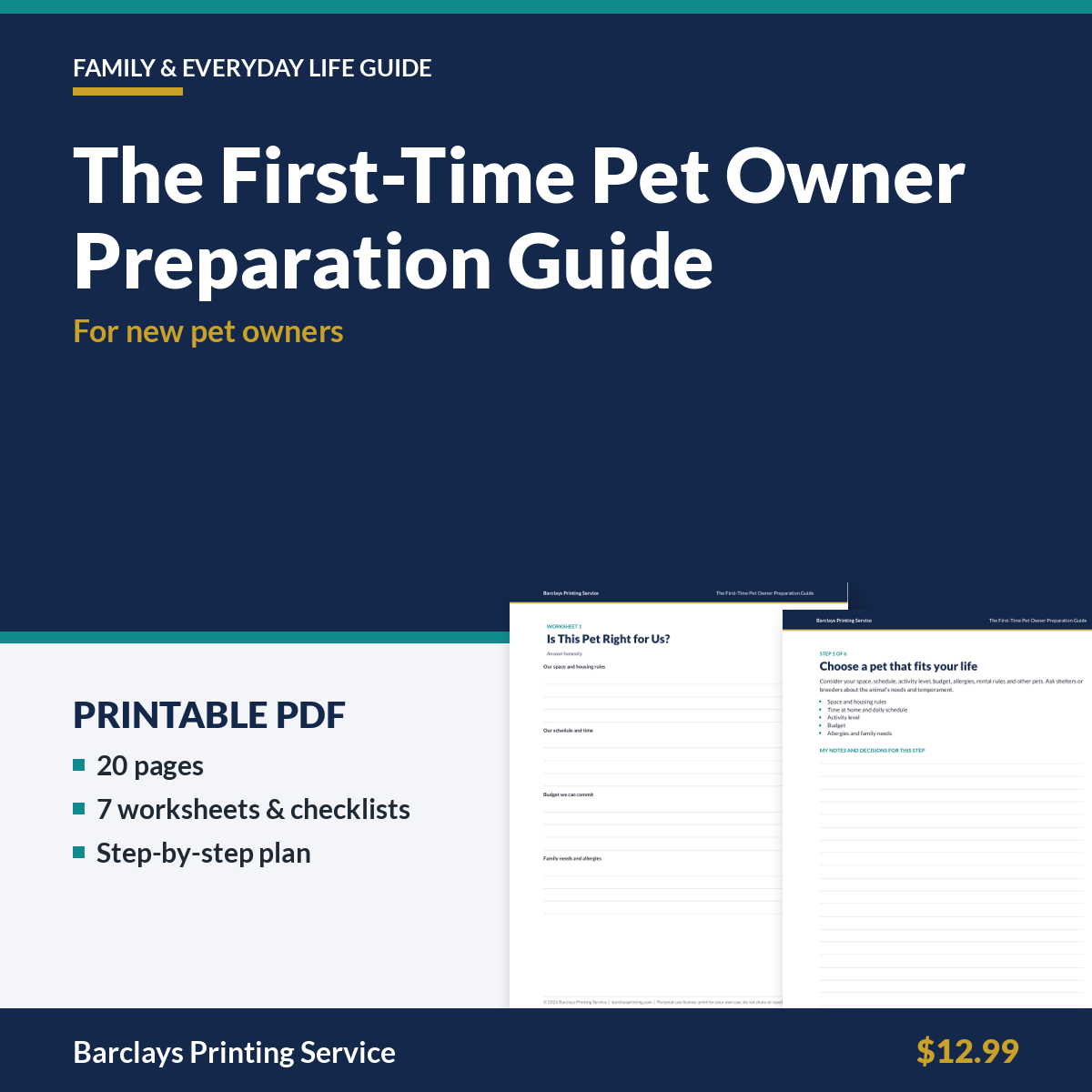
Our First-Time Pet Owner Preparation Guide is a 20-page printable PDF for new pet owners, priced at $12.99. It includes an Is This Pet Right for Us? worksheet, a First-Year Pet Budget, a Pet-Proofing Checklist, a Supplies Shopping List, a Pet Health Record, a Daily Routine Chart and a First Month Progress Log, plus a personal action plan. It’s an instant digital download you can print as many times as you need. It is general information, not veterinary advice, and no specific outcome is promised.