
When you’re carrying several debts at once, the hardest part often isn’t the payments themselves. It’s not knowing which debt to pay first, how long it will take to be done, or whether the extra $25 you sent last month made any difference. Without a plan, minimum payments can stretch on for years.
A payoff plan starts with an honest list: every balance, interest rate and minimum payment. Then you choose a method for where your extra money goes and track progress every month. This post walks borrowers through the six steps in our printable Debt Payoff Planning Workbook.
Please note: this post and the guide are general information for organizing your own money. They are not financial, tax or legal advice. For decisions about your situation, consult a qualified professional.
Step 1: List Every Debt
Gather your statements and write down every debt you owe. For each one, record:
- Current balance
- Interest rate (APR)
- Minimum payment
- Due date
- Lender contact
Include the debts you’d rather forget
Credit cards, car loans, student loans, medical bills, buy-now-pay-later plans, money borrowed from family and accounts in collections all belong on the list. Missing a debt is the first mistake the workbook warns about, because a plan built on an incomplete list will keep surprising you.
Step 2: Choose a Payoff Method
The two most popular methods share the same foundation: pay the minimum on everything, then put every extra dollar toward one debt at a time. The difference is which debt gets the extra.
Snowball: smallest balance first
List debts from smallest balance to largest. Clearing a small debt quickly gives you a visible win, and many people choose the snowball for that motivation.
Avalanche: highest interest rate first
List debts from highest APR to lowest. Targeting the most expensive debt first reduces the total interest you pay, so it’s often chosen by people focused on the numbers.
Hybrid: one quick win, then avalanche
Pay off one small debt first for momentum, then switch to highest APR. It’s a balance of both approaches.
Not sure? Write your debts out in both orders side by side. Seeing the two lists together often makes the choice obvious. The best method is the one you’ll stick with.
Step 3: Find Extra Money for Payments
Even small, consistent extra payments shorten payoff time. Review your budget for amounts you can direct to debt:
- Budget cuts: trim or pause a few wants
- Windfalls: refunds, gifts and bonuses
- Extra income: extra hours or a short-term side gig
- Freed-up payments: when a debt is paid off, roll its payment over to the next one
Write each source down with a monthly amount and a start date, so “I’ll pay extra when I can” becomes a specific number.
Step 4: Build Your Monthly Plan
Your monthly plan follows a simple order:
- Pay every minimum on time.
- Send the extra to your focus debt.
- When the focus debt is paid off, roll its full payment to the next debt on your list.
- Automate payments where possible so nothing slips.
Minimums come first
Paying extra on one debt while missing a minimum on another is a common mistake. Late fees and penalty rates can wipe out the progress you’re trying to make.
Ask how extra payments are applied
Before you make extra payments, check with each lender how they’re applied, for example to principal. A quick call or message now avoids confusion later.
Let the payments roll
Rolling over freed payments is what makes either method speed up over time. Each paid-off debt adds its payment to the next, so the amount aimed at your focus debt keeps growing. Not rolling them over is one of the mistakes on the workbook’s list.
Step 5: Protect Your Plan
A payoff plan can be knocked off course by one unexpected bill. The workbook suggests four protections:
- A starter emergency fund, so a surprise expense doesn’t become a new balance
- Pause new credit while you’re paying off
- Contact lenders early if you know you’ll miss a payment
- Watch for debt-relief scams
For hardship, consolidation or legal questions, talk to a reputable nonprofit credit counselor or a qualified professional rather than a company making big promises.
Step 6: Track and Celebrate
Update your balances once a month and write them down. Watching the totals shrink is one of the best motivators there is. Update your expected payoff dates as you go, too.
When a debt hits zero, mark it paid off, note where its payment is rolling to, and celebrate the milestone in a way that doesn’t involve spending big.
Common Mistakes to Avoid
- Missing a debt on the list
- Paying extra while missing minimums
- Not rolling over freed payments
- No emergency fund, so new debt appears
- Falling for debt-relief scams
Related Reading
A debt plan fits inside a full budget. Read our post on how to create a personal budget from scratch, and see our step-by-step plan to build a three-month emergency fund so new debt doesn’t creep back in.
Get the Debt Payoff Planning Workbook
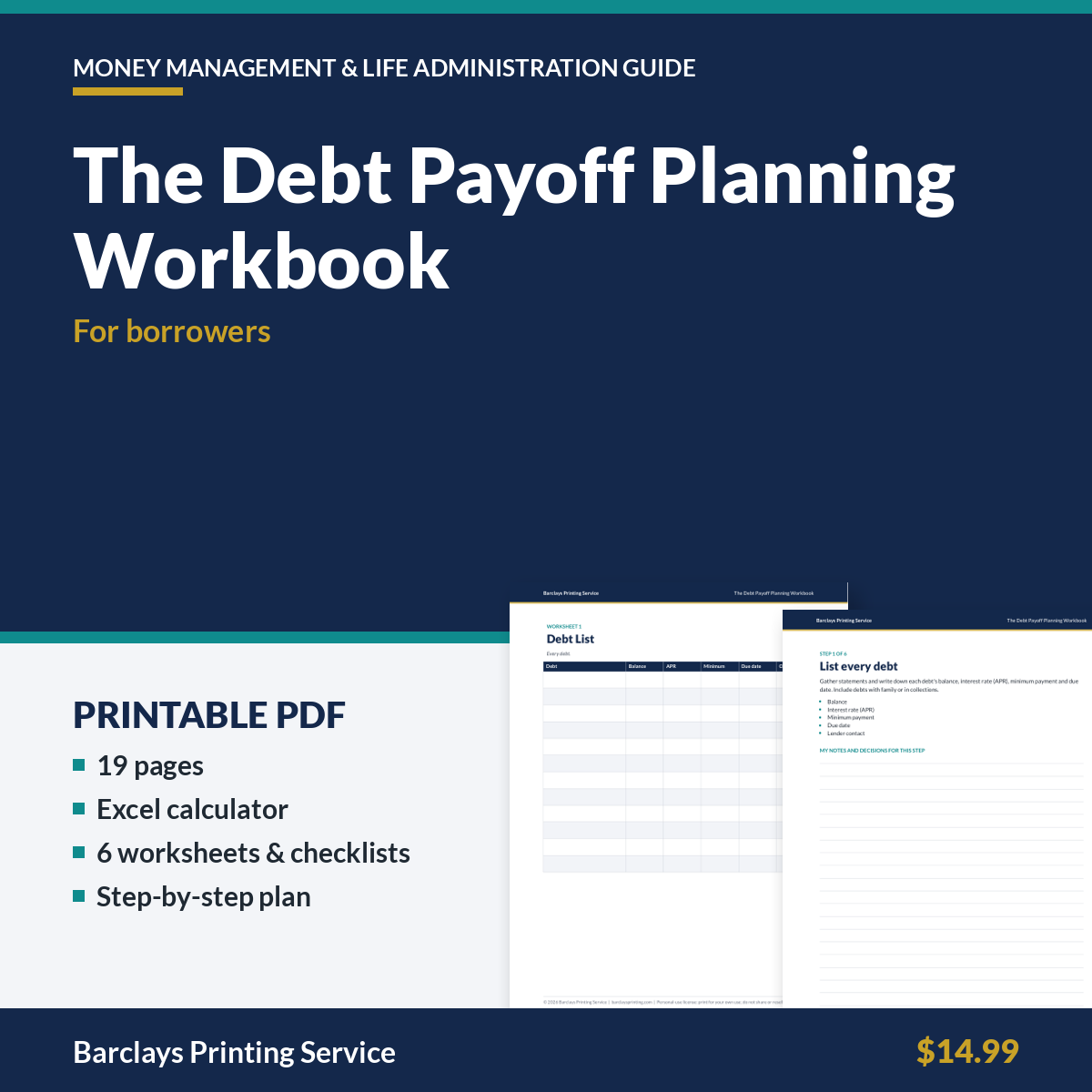
The Debt Payoff Planning Workbook is a 19-page printable PDF that walks you through all six steps, with six worksheets: a Debt List, Method Comparison, Extra Money Finder, Monthly Payment Plan, Balance Tracker and Payoff Milestones. It also includes an Excel calculator with working formulas that estimates months to payoff from your own numbers, plus an action plan and notes pages. It’s an instant download for $14.99. Get the workbook here.