
Finding your first apartment is exciting, and it’s easy to fall for a place based on the rent alone. Then the other costs show up: application fees, a security deposit, utilities, internet, renters insurance, furniture, a parking spot, a longer commute. Suddenly the number that looked affordable on the listing doesn’t fit your budget at all.
Affordability is about the full monthly cost and the move-in cash you need, not just the rent. This post walks first-time renters through the six steps in our printable First Apartment Budget Calculator, so you can test an apartment before you commit.
Please note: this post and the guide are general information for organizing your own money. They are not financial, tax or legal advice. For decisions about your situation, consult a qualified professional.
Step 1: Start With Your Take-Home Pay
Build your budget from the money that actually arrives in your account after taxes and deductions, not your salary before them. Write down:
- Net pay per month
- Any other reliable income
- A cautious average if your income varies
If you work hourly, freelance or rely on tips, use a lower-than-typical month as your baseline. It’s far easier to adjust upward later than to scramble when a slow month hits right after you’ve signed a lease. Also set a monthly savings goal now, so it becomes part of the budget rather than whatever is left over.
Step 2: List Every Monthly Cost
Budgeting only for rent is the number one mistake the guide warns about. Your real monthly cost includes:
- Rent
- Utilities (electric, gas, water and trash) and internet
- Renters insurance
- Transport and parking
- Groceries
- Phone
- Debt payments
- Savings
- Personal spending
Ask about utilities for each unit
Utility costs vary a lot from one building to the next. Ask the landlord or current tenants what utilities typically cost in that specific unit, and find out which ones, if any, are included in the rent.
Step 3: Calculate Your Move-In Costs
Even if the monthly numbers work, you need enough cash to get through the door. Move-in costs can include:
- Application fees, paid when you apply
- Security deposit and first month’s rent, at signing or move-in
- Last month’s rent, if required
- Utility deposits or setup fees, before move-in
- Movers or a truck
- Furniture and kitchen and bath basics, in the first weeks
Some places ask for last month’s rent up front; check your local rules on what a landlord can charge. Add every item up for each apartment you’re considering so you know exactly how much cash each one requires.
Step 4: Test the Rent
Many people use a guideline such as keeping rent around a third of gross income. That’s a useful first check, but your full budget is the real test. Ask three questions:
- Does your total monthly cost fit inside your take-home pay?
- Is there still room for savings each month?
- Will you have an emergency cushion left after paying move-in costs?
If the monthly total leaves no room for savings, the place may be too expensive, even if it technically fits. Moving in with no cash cushion is another common mistake: one surprise bill in the first month can put you behind.
Step 5: Compare Apartments on Total Cost
When you’re choosing between places, compare the total monthly cost, not just the rent. A slightly higher rent with utilities included may cost less overall. Line up each apartment side by side on:
- Total monthly cost
- Move-in cash needed
- Commute cost and time
- Included utilities
- Laundry, parking, lease length and pet rules
Don’t skip the commute
A cheaper apartment farther away can cost more once you add gas, transit fares or parking, plus the time you spend getting to work. Ignoring commute costs is on the guide’s list of mistakes for good reason. And signing before comparing total costs is the one that’s hardest to undo.
Step 6: Split Costs Fairly With Roommates
If you’re sharing, agree on the split before anyone signs. Common options are:
- Equally
- By room size
- By income
Decide how you’ll split rent, utilities and internet, and shared supplies like cleaning products and paper towels. Then put the agreement in writing. Verbal roommate agreements are easy to remember differently a few months later; a written one saves friendships.
Once You’ve Signed: Set Up Services Early
Schedule electric, gas, water, trash and internet before move-in day, and line up renters insurance, mail forwarding and any parking permit. Tracking provider, start date and any deposit for each one keeps move-in week calm.
Common Mistakes to Avoid
- Budgeting only for rent
- No cash cushion after move-in
- Ignoring commute costs
- Verbal roommate agreements
- Signing before comparing total costs
Related Reading
Once your budget checks out, use our first apartment checklist to plan the move itself, and read how to build a three-month emergency fund to grow your cushion after you settle in.
Get the First Apartment Budget Calculator
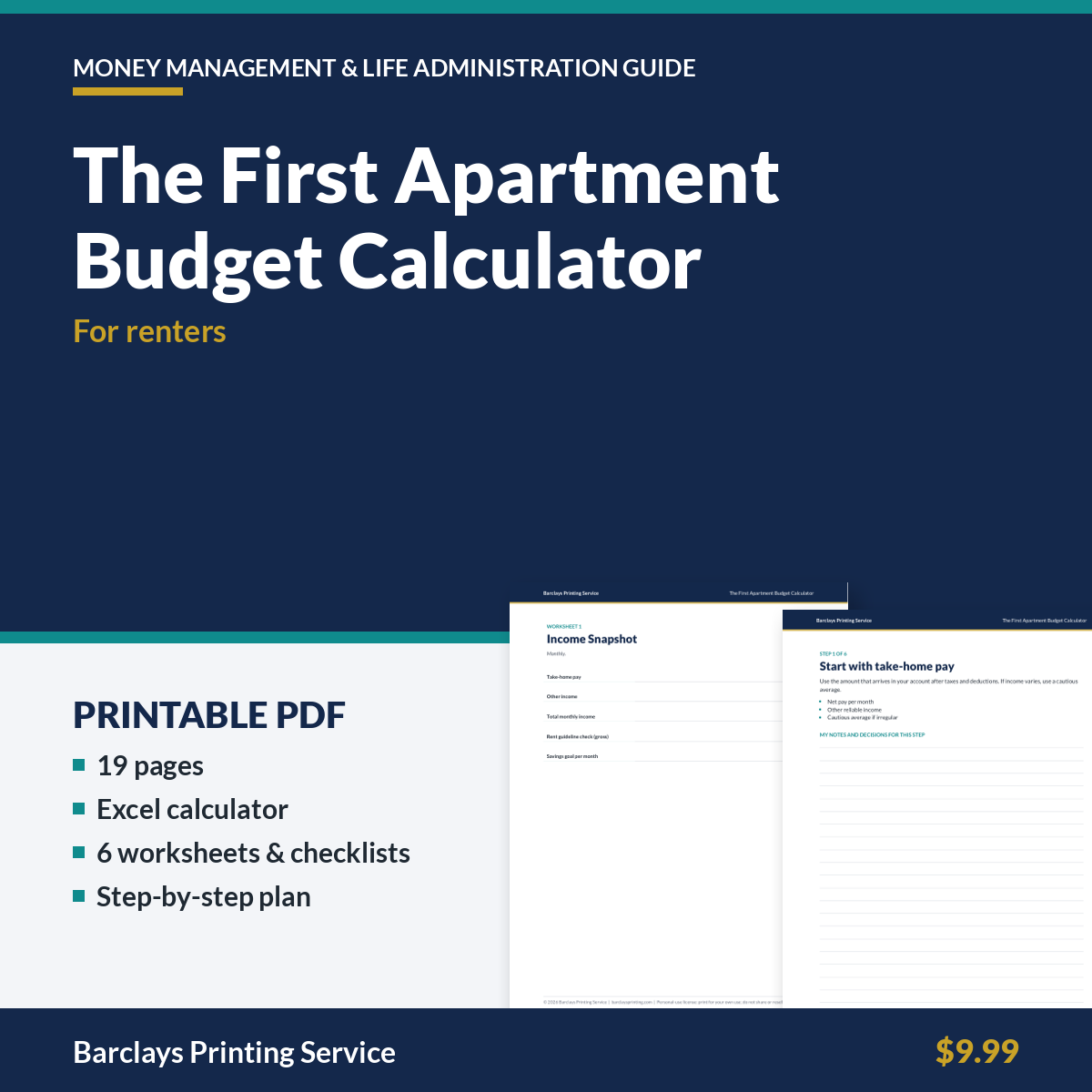
The First Apartment Budget Calculator is a 19-page printable PDF that walks you through all six steps, with six worksheets: an Income Snapshot, Monthly Cost Worksheet, Move-In Cash Needed, Apartment Comparison, Utility and Service Setup Tracker, and Roommate Split. It also includes an Excel calculator with working formulas, plus an action plan and notes pages. It’s an instant download for $9.99. Get the calculator here.