
Every family has that one relative who says, “We really need to get everybody together.” Then the reunion either never happens, or one person ends up planning it alone, fronting the money and chasing cousins for payments for months afterward.
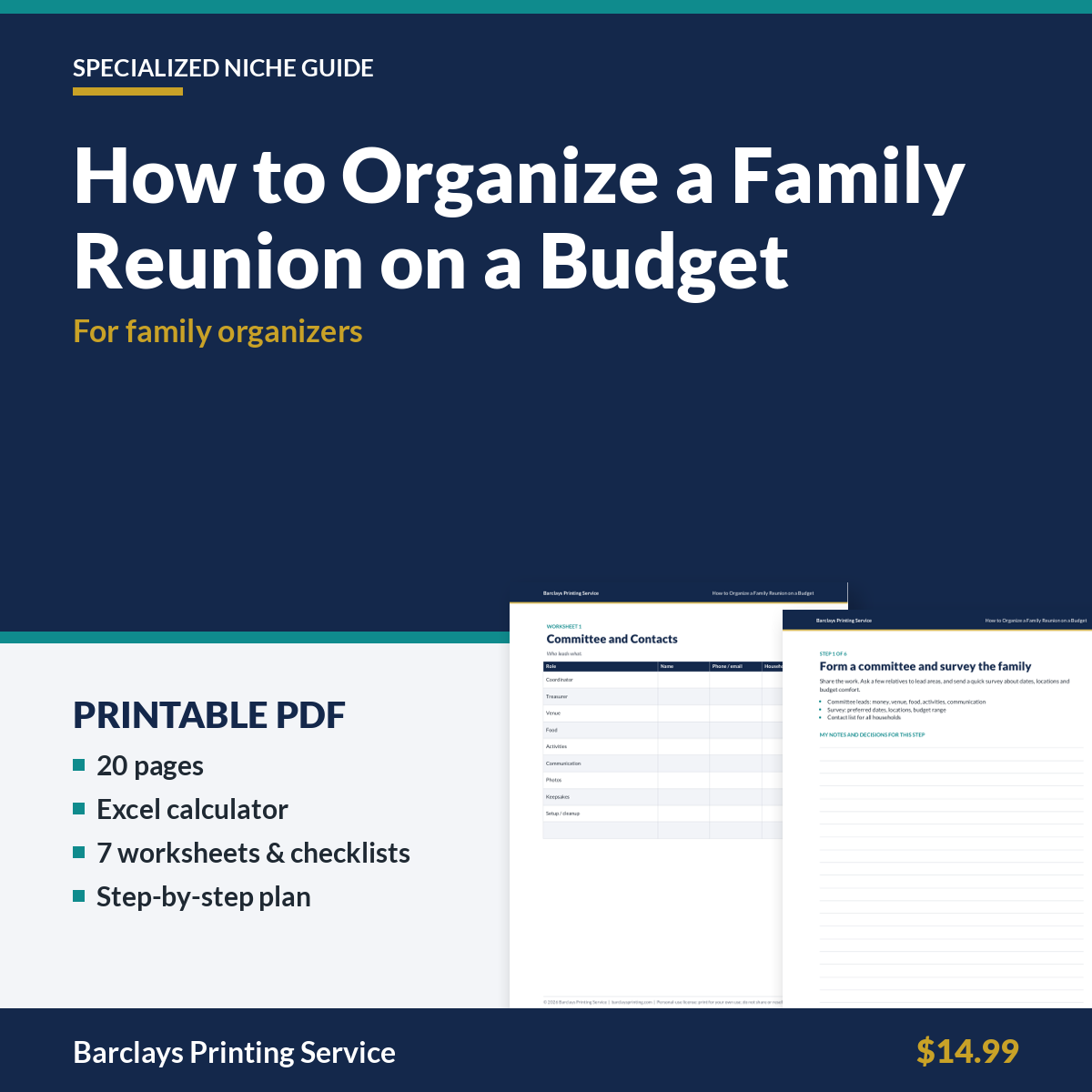
It doesn’t have to go that way. An affordable reunion comes down to a few early decisions, shared responsibilities, open communication about costs and simple activities that let people actually connect. This post walks through the six steps in our printable guide, How to Organize a Family Reunion on a Budget, so your family can gather without anyone getting burned out or out of pocket.
Step 1: Form a Committee and Survey the Family
The most common reunion mistake is one person doing everything. Instead, ask a few relatives to lead specific areas:
- Money: a treasurer who tracks every payment and receipt
- Venue: someone to research and book the location
- Food: a lead for the menu and potluck sign-ups
- Activities: a lead for games, displays and the program
- Communication: the person who keeps everyone updated
You can add roles for photos, keepsakes and setup/cleanup as the family grows. Then build a contact list for every household and send a quick survey before you commit to anything. Ask about preferred dates, preferred locations, the cost per person or household they’re comfortable with, and what they’re willing to help with. That last question is gold: it turns relatives into volunteers before you’ve even asked.
Step 2: Set the Date, Location and Budget
Give people enough notice. If possible, pick a date 6 to 12 months out so families can request time off, save and plan travel.
Next, set a total budget and decide how costs will be shared. The two common approaches are:
- Per person: fairer when household sizes vary a lot
- Per household: simpler to collect and track
Either way, think about a sliding scale or sponsorship for relatives who need it. Some family members may be glad to cover an elder or a young family’s share.
Above all, be transparent. Share the budget and the spending with the family. Not sharing the budget openly is one of the mistakes the guide warns about, because people pay more willingly when they can see exactly where the money goes.
Step 3: Choose a Budget-Friendly Venue
The venue is often the biggest line in the budget, so look at low-cost options first:
| Venue type | What to consider |
|---|---|
| Family home | Space, parking, restrooms |
| Park pavilion | Reservation rules, weather plan |
| Church or community hall | Rental fees, kitchen access |
| Hotel block | Best for multi-day reunions |
Before you book, check capacity and accessibility, restrooms and shade, booking rules and deposits, food and alcohol rules, and parking. Booking a venue without checking its rules is another classic mistake. Finding out on the day that grills or outside caterers aren’t allowed is an expensive surprise.
Step 4: Plan Food and Supplies
Food can be a potluck, family-cooked meals, catering or a mix. A popular budget approach is to have the committee cover the main dishes while households sign up for sides and desserts.
The key word is sign up. A potluck with no sign-up sheet is how you end up with ten potato salads and no drinks. Track each dish or item, its category, who’s bringing it, how many it serves and whether it’s confirmed.
Don’t forget the unglamorous supplies:
- Drinks and plenty of ice
- Plates, cups and utensils
- Coolers and serving tables
And follow safe food-handling practices, especially for dishes that sit outside in warm weather.
Step 5: Plan Activities and Keepsakes
The best reunion moments are usually the simple ones. Plan something for every age group:
- Games for the kids
- Storytelling time with the elders
- A family tree or family history display
- A group photo (schedule it, or it won’t happen)
- A talent or memory share
Put it all on a simple activity schedule with times, a lead for each activity and the supplies needed.
Keepsakes without blowing the budget
Printed reunion t-shirts and programs are a favorite, but they’re optional. The guide’s advice is to take pre-orders so you only pay for what people actually want. Collect sizes and payment by a firm deadline, then place one order. If you’re designing shirts, our t-shirt print placement guide explains where to put the design and how big to make it.
Step 6: Collect Money, Communicate and Follow Up
Money is where reunions get awkward, so make the system clear from the start:
- Set payment deadlines (no deadlines is a mistake that leaves the treasurer chasing people for weeks)
- Track every payment by household: people, amount due, amount paid and date
- Send regular updates by group text or email
The day itself
On the day, confirm venue access early, put out signs and name tags, set up food tables and coolers, have a first-aid kit on hand, set a time for the group photo and line up a cleanup crew.
After the reunion
The follow-up is what makes the next reunion easier. Share a final financial summary, share photos, send thank-you messages, write down notes for next time and talk about which family might host next.
Common Mistakes to Avoid
- One person doing everything
- Not sharing the budget openly
- Booking a venue without checking the rules
- A potluck with no sign-up
- No payment deadlines
If you also help plan events at church, our post on church event planning uses the same team-first approach.
Get the Printable Family Reunion Planner
How to Organize a Family Reunion on a Budget is a printable guide for family organizers. It includes the six steps, seven worksheets and checklists (committee and contacts, family survey questions, reunion budget, household payment tracker, potluck sign-up, activity schedule and a day-of and follow-up checklist), an action plan and notes pages, plus an Excel calculator to help set a per-person or per-household cost. It’s $14.99 as an instant download.
Get the family reunion guide here and start planning a gathering everyone can afford.