
When someone you love dies, the grief arrives together with a long list of decisions, phone calls and paperwork, often within the first few days. Families in that moment don’t need more pressure. They need the tasks put in order and a place to write things down.
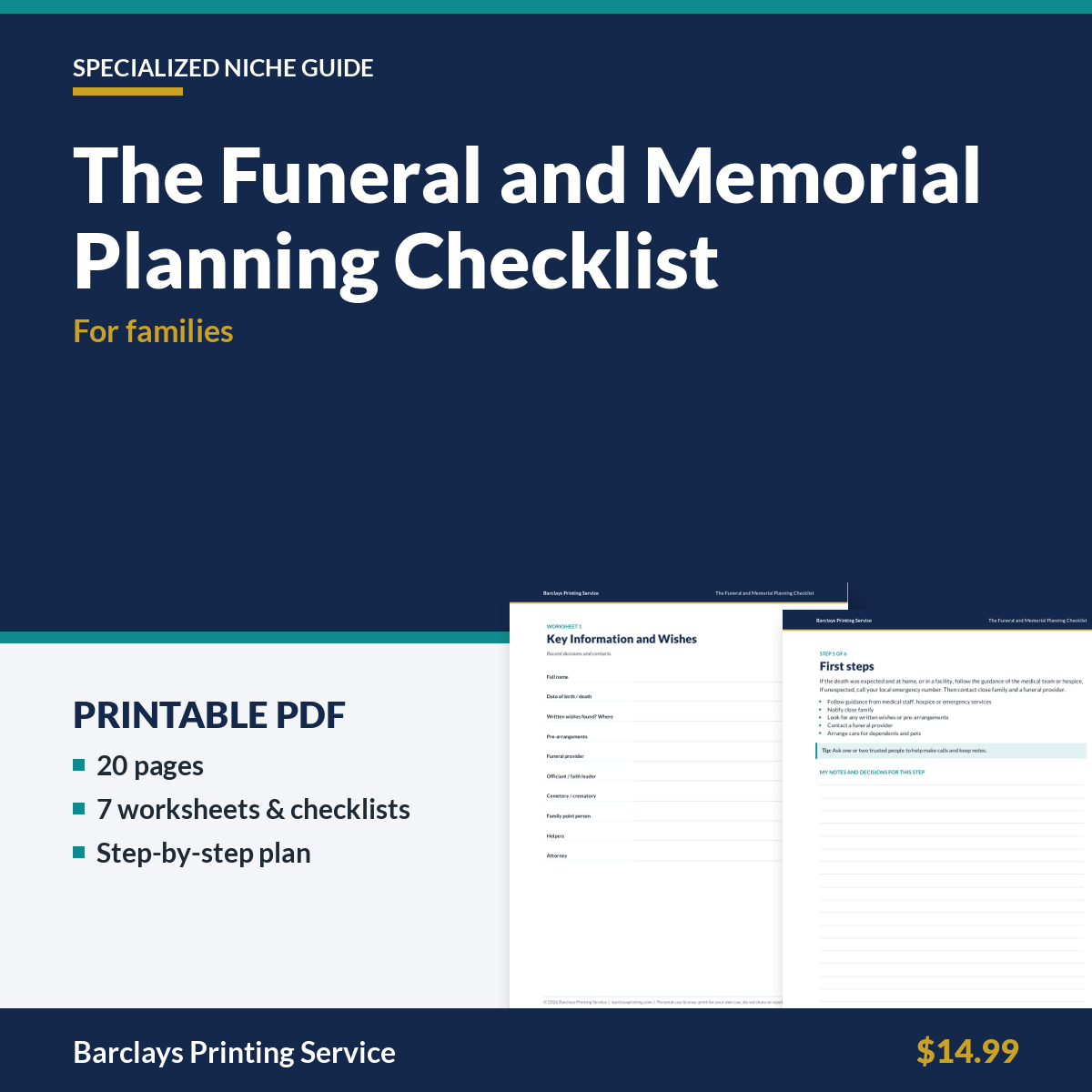
That’s what our Funeral and Memorial Planning Checklist is for. You don’t have to do everything at once, and you don’t have to do it alone. This post walks through the checklist’s six steps, from the first hours through the paperwork that comes afterward.
Important: This checklist is general planning information, not legal or financial advice. Requirements for death certificates, burial, cremation and estates differ by location. Confirm with your funeral provider, local authority, and an attorney where needed.
Step 1: First Steps
What happens first depends on the circumstances:
- If the death was expected and at home, or happened in a facility, follow the guidance of the medical team or hospice.
- If it was unexpected, call your local emergency number.
Then:
- Notify close family
- Look for any written wishes or pre-arrangements
- Contact a funeral provider
- Arrange care for any dependents and pets
Tip from the checklist: ask one or two trusted people to help make calls and keep notes. One person carrying every task is a mistake the checklist specifically warns about, and it’s easy to fall into when you’re the “organized one” in the family.
Step 2: Choose a Funeral Provider and Arrangements
Ask funeral providers for an itemized price list and compare them. Not asking for one is the first mistake on the checklist’s list. An itemized list lets you see what each service costs and choose what’s right for your family.
Talk through:
- Burial, cremation or other options consistent with the person’s wishes
- Whether to hold a viewing or wake
- Faith and cultural traditions that matter to your family
- Transport and cemetery arrangements
Step 3: Plan the Service
The service is where families get to honor the person’s life. Decisions include the type of service and location, the officiant, music and readings, the eulogy and other speakers, pallbearers, a program with photos and a repast or reception afterward.
| Element | What to decide |
|---|---|
| Service | Where, when and what type |
| Program | Photos, obituary, order of service |
| Music | Hymns, songs, musicians |
| Repast | Location, food, helpers |
The memorial program
Many families print a memorial program with photos, the obituary and the order of service. It’s often the keepsake people take home. To make it go smoothly, gather the photos early, choose one person to collect and proofread the wording and confirm the order of service with the officiant before anything goes to print.
Step 4: Notify People and Write the Obituary
Make a list of people and organizations to tell so no one is missed:
- Family and friends
- The person’s employer or school
- Their faith community and other organizations
Then write the obituary with key life details, family and service information. Decide where it will appear, such as a newspaper, an online listing or the funeral home’s website. Splitting the notification list between two or three relatives makes the calls much less draining for any one person.
Step 5: Track Costs and Payments
Costs can come from many directions at once, so keep a record of every cost, who is paying and the receipts. Common categories include:
- Funeral provider costs
- Cemetery or cremation costs
- Program printing, flowers and the repast
Ask about any benefits or insurance that may help, such as life insurance and employer or veterans’ benefits where applicable. Missing benefit or insurance claims is one of the mistakes the checklist highlights. They’re easy to overlook in a stressful time.
Step 6: Handle Paperwork Afterward
The paperwork continues after the service. The checklist covers:
- Certified death certificates: order enough through your funeral provider or local office. Ordering too few is a common mistake, because many institutions ask for one.
- Government agencies and benefits
- Banks and creditors
- Insurance claims
- Utilities, subscriptions and digital accounts, which are easy to forget
- Will and estate questions for an attorney
If you’re also helping a family get its finances in order for the future, our post on how to organize your financial accounts can make the next transition easier.
Common Mistakes to Avoid
- Not asking for an itemized price list
- One person carrying every task
- Ordering too few certified death certificates
- Forgetting digital accounts and subscriptions
- Missing benefit or insurance claims
Get the Printable Funeral and Memorial Planning Checklist
The Funeral and Memorial Planning Checklist gives families one place to keep it all: the six steps, plus worksheets for key information and wishes, a first-days checklist, service planning, people and organizations to notify, an obituary planner and a cost tracker, along with an action plan and notes pages. It’s $14.99 as an instant download.
Get the funeral and memorial planning checklist here so your family has a clear path through a hard time.