
Anyone who has grown up in the Caribbean knows the feeling: a system forms out in the Atlantic, the forecast cone shifts toward home, and suddenly everyone is in the supermarket at the same time buying water, batteries and bread. The households that handle storms best usually aren’t the ones that rush. They’re the ones that prepared in calm weather.
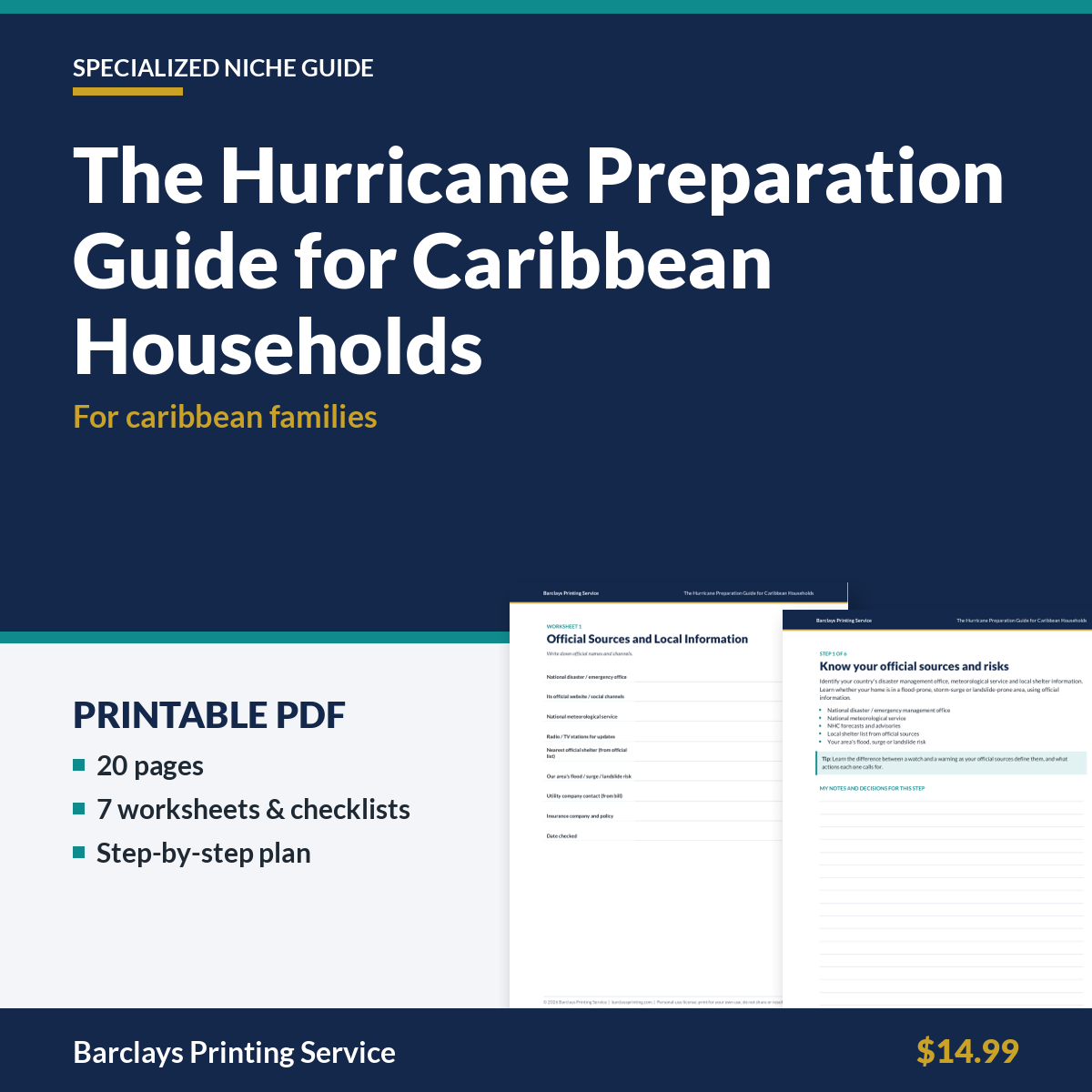
This post walks through the six steps in our printable Hurricane Preparation Guide for Caribbean Households, which organizes preparation into stages: before the season, when a storm is forecast, during the storm and recovery afterward.
Important: This guide is general preparedness information. Always follow official instructions from your national or local disaster management office and weather service. In an emergency, contact your local emergency services.
Step 1: Know Your Official Sources and Risks
Official information comes first. Before the season starts, identify and write down:
- Your country’s national disaster or emergency management office
- Your national meteorological service
- Forecasts and advisories from the U.S. National Hurricane Center (NHC), which issues tropical cyclone forecasts for the Atlantic basin
- Your local shelter list, from official sources
- Whether your area is prone to flooding, storm surge or landslides, using official information
Use the official websites, channels and phone numbers those offices publish, and note which radio and TV stations carry updates. It also helps to learn the difference between a watch and a warning as your official sources define them, and what actions each one calls for.
Relying on unofficial social media rumors is one of the biggest mistakes the guide warns about. Forwarded voice notes and screenshots spread fast during a storm. Check them against official sources before you act.
Step 2: Prepare Before the Season
The calm months are for the bigger jobs, the ones that are hard or impossible to do once a storm is on the way:
- Check the roof, windows and doors
- Get shutters or window protection ready, and label the panels
- Trim trees and branches, and clear drains and gutters
- Secure and clean your water tank
- Plan where outdoor items will be stored
- Review your insurance policy
- Build your supply kit gradually over several weeks
Waiting for a forecast to start preparing is the first mistake on the guide’s list. Spreading the work and the cost across the calm months is easier on both your schedule and your budget.
| Stage | Focus |
|---|---|
| Before season | Home, insurance, supplies, documents, plan |
| Storm forecast | Top up, secure, decide where to shelter |
| During | Stay safe, stay informed |
| After | Wait for the official all-clear, check safely |
Step 3: Build Your Supply Kit
Prepare supplies for several days, using the quantities your national disaster office recommends. A solid kit includes:
- Drinking water, plus separate water for washing
- Non-perishable food and a manual can opener
- Medications and a first-aid kit
- Flashlights, batteries and a battery or wind-up radio
- Phone chargers and power banks
- Cash, because banks and card machines may be down
- Hygiene and baby supplies
- Pet food and supplies
- Tarps, rope, tools, plastic bags, and matches or a lighter in a waterproof bag
Store water safely and rotate food so it’s still good when you need it. And don’t skip the cash. Having no cash on hand is a common mistake when power and networks go down.
Step 4: Protect Documents and Valuables
Floodwater and roof leaks can destroy paperwork that’s very hard to replace. Keep important documents in a waterproof bag or box:
- IDs and passports
- Land titles
- Insurance papers
Make encrypted digital copies and store them securely. Then photograph your home and belongings before the season. If you ever need to make an insurance claim, those “before” photos make it much easier to show what was there.
Step 5: Make a Family Plan
Decide the big questions now, while everyone is calm:
- Where you’ll shelter: at home, with relatives or at an official shelter, plus a backup location
- When you’ll leave if advised, your route and your transport
- How you’ll communicate, including an out-of-area or overseas contact
- Who checks on older relatives and neighbors
- Your pet plan
Include family overseas
Many Caribbean families have relatives in the U.S., Canada and the U.K. who will be anxious for news. Put them in your contact plan with a check-in method everyone agrees on, so one message reaches the whole family instead of dozens of calls draining a phone battery.
Step 6: When a Storm Is Forecast, During and After
When a storm is forecast
Follow official updates. Top up water, food and medications. Charge phones and power banks, fuel vehicles and withdraw cash. Secure outdoor items, install shutters, move valuables and documents up high and fill containers with water for washing. Follow evacuation orders from the authorities.
During the storm
Stay indoors, away from windows, and keep following official updates on your radio or phone.
After the storm
Wait for the official all-clear before going out. Going out too early is one of the mistakes the guide highlights. Watch for downed wires, floodwater and damaged structures, and avoid floodwater and downed lines entirely. Document damage with photos for insurance and repairs, and note who you reported it to and when.
Safety tip from the guide: never use generators or charcoal stoves indoors. Follow the manufacturer’s and official safety guidance.
For the year-round side of looking after a home, our home maintenance calendar post shows how to schedule seasonal jobs like roof checks and gutter cleaning.
Get the Printable Hurricane Preparation Guide
The Hurricane Preparation Guide for Caribbean Households puts everything above into a printable binder: the six steps, a quick-reference page, worksheets and checklists for official sources, before-season home checks, your supply kit, a family contact plan, a shelter and evacuation plan, storm-forecast actions and an after-storm damage log, plus an action plan and notes pages. It’s $14.99 as an instant download.
Get the hurricane preparation guide here and fill it in before the next season starts.