
Caring for a parent or loved one who lives far away is stressful in a particular way. You may not know their doctors, their neighbors or what their days actually look like. Family members may disagree, or lose track of who is doing what. And when a crisis happens, the information you need is scattered across phones, drawers and memories.
You can’t be there every day, but you can organize who is. Long-distance care works best with a team, shared information and clear roles. This post walks adult children, siblings and relatives coordinating care for someone in another city, state or country through six practical steps.
Please note: this post and the kit it’s based on help you organize information and coordinate care. They are not medical, legal or financial advice. Follow the guidance of your loved one’s health professionals, confirm legal and financial arrangements with a qualified attorney or adviser, and call local emergency services in an emergency.
Step 1: Understand Current Needs
Start by talking with your loved one about what help they actually want. It’s their life, and help that’s imposed rarely works as well as help that’s welcomed. Then pay attention during calls and visits. Look at:
- Daily living tasks, such as bathing and dressing, meals, housekeeping and laundry
- Health, medications and appointments
- Home safety and home repairs
- Transport and shopping
- Bills and paperwork
- Social contact and mood
For each area, note how much help is needed (none, some or a lot), what help is already in place and where the gaps are. The gaps become your next steps.
Step 2: Build the Care Team
One person doing everything is the first mistake on the list, and it’s a fast route to burnout. List everyone who could play a part: family members, friends, neighbors, their faith community and paid helpers. Then assign clear roles so everyone knows what they’re responsible for:
- Local point person: someone nearby who can check in or respond in person. Not having one is another common mistake.
- Family coordinator: keeps everyone updated and tracks tasks.
- Money and paperwork helper, with your loved one’s permission.
- Health appointment helper.
- Others as needed, such as home maintenance, social visits and an emergency responder.
Name a backup for each role, because people get sick, travel and change jobs. And if you’re not sure what help exists in your loved one’s area, local community agencies serving older adults can often explain what services are available near them.
Step 3: Centralize Key Information
Information spread across many phones is one of the biggest headaches in long-distance care. With your loved one’s permission and appropriate privacy, gather the essentials in one shared place:
- Contacts and providers: primary doctor, specialists and pharmacy
- Where the medication list is kept
- Insurance and benefits
- Where key documents are kept
- Home details, including who holds a spare key
- A neighbor contact and a faith or community contact
Keep your loved one’s address and other personal details private, and share them only with the people who need them. If you’ll be the one keeping track of appointments and medications, our Family Medical Appointment Organizer offers a system for provider directories, visit notes and medication lists.
Step 4: Set Up Communication
Agree on how and how often everyone stays in touch. A simple rhythm might look like this:
- Your loved one: agreed check-in calls.
- The local helper: a weekly update.
- The family: a weekly or bi-weekly summary.
- Providers: as needed, with permission.
Pick one method for family updates, whether that’s a shared document, a group chat or a call schedule, and stick to it. Keep a shared care log, too: the date, the update, who posted it, any action needed and who’s handling it.
Just as important, decide in advance how the family makes decisions and how you’ll handle disagreements. It’s much easier to agree on a process when things are calm than in the middle of a crisis.
Step 5: Plan Visits With Purpose
Visits are precious, and it’s easy to spend all of one on errands. Plan ahead so the time counts.
Before the Visit
- Book appointments to fall during your visit.
- Arrange to meet local helpers.
- List supplies to buy and questions to ask.
During the Visit
- Do a home safety walk-through.
- Do a medication check.
- Review mail and bills, with permission.
- Stock up on food and supplies.
- Update records and plans.
After the Visit
Send the family an update and assign follow-ups, so nothing you learned gets lost once you’re home.
Step 6: Prepare for Emergencies and Legal Paperwork
Waiting for a crisis to discuss legal documents is one of the most common, and most painful, mistakes. Make an emergency plan now that covers:
- An emergency contact tree, starting with the first person to call and the local responder
- Hospital information, including the nearest hospital
- Who travels, and how travel will be paid for
- Pet care, if your loved one has a pet
- Which documents to bring, and where they’re kept
- Legal documents and their locations, and an attorney contact
Ask an attorney about powers of attorney, health care directives and provider privacy authorizations, so the right people can act if needed. Those decisions belong with a qualified professional, and your loved one, not a checklist.
For more on gathering an emergency plan into one place, see our post on the Family Emergency Evacuation Binder.
Common Mistakes to Avoid
- One person doing everything.
- Information spread across many phones.
- No local point person.
- Waiting for a crisis to discuss legal documents.
- Visits spent only on errands.
Get the Printable Long-Distance Family Care Coordination Kit
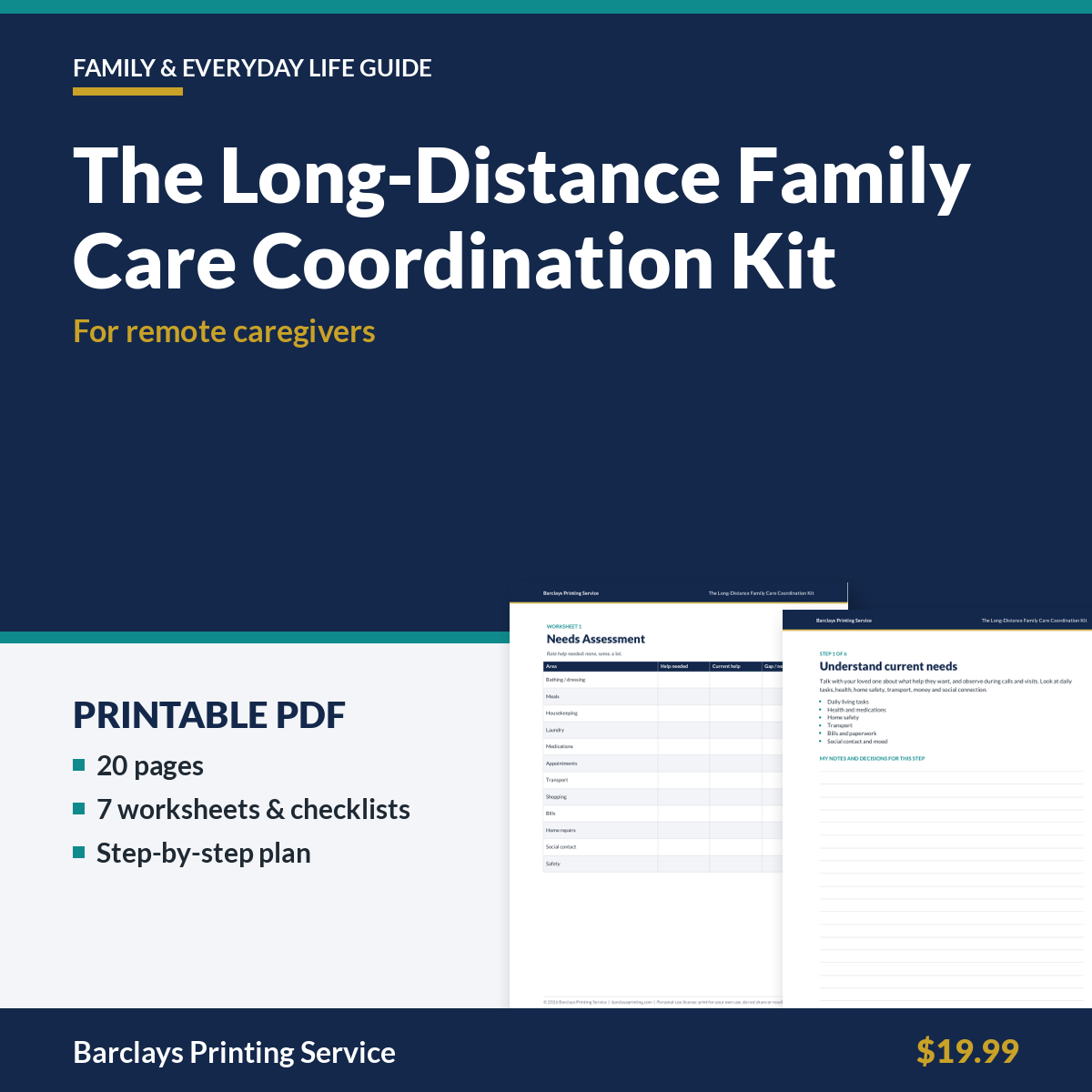
Our Long-Distance Family Care Coordination Kit is a 20-page printable PDF for remote caregivers, priced at $19.99. It includes a Needs Assessment, Care Team Roles, a Key Information Sheet, a Communication Plan, a Visit Planning Checklist, an Emergency Plan and a Care Log, plus a personal action plan. It’s an instant digital download you can print as many times as you need. It helps you organize information and is not medical, legal or financial advice, and no specific outcome is promised.