
The first month with a newborn tends to blur together. Feeds, diapers, short naps, appointments and a steady stream of well-meaning visitors can make it hard to remember when the baby last ate, let alone what you wanted to ask the pediatrician. Sleep-deprived memory isn’t reliable, and it isn’t supposed to be.
The good news is that much of what makes the first weeks feel lighter can be done before the baby arrives. This post walks expecting parents through six steps to prepare your home and support team, keep simple records, plan meals and visitors, and look after yourselves during the first 30 days.
Please note: this post and the organizer it’s based on help you keep records and plan ahead. They are not medical advice. Always follow the guidance of your doctor, midwife or pediatrician, and call your local emergency number in an emergency.
Step 1: Prepare the Essentials Before Birth
One of the most common mistakes new parents make is leaving setup until after the birth, when time and energy are in short supply. Work through the essentials in the weeks before your due date:
- A safe sleep space, set up according to current safe-sleep guidance from your pediatrician or national health authority. Ask about it at a prenatal visit if you’re unsure.
- A car seat installed according to its manual, and checked.
- A feeding station where you’ll do night feeds, with everything you need within reach.
- A diaper station stocked and ready.
- A packed hospital or birth bag.
- Laundry stocked and some freezer meals made.
Don’t forget the paperwork side: ask your insurance questions and submit any leave paperwork before the baby comes.
Put Key Contacts in One Place
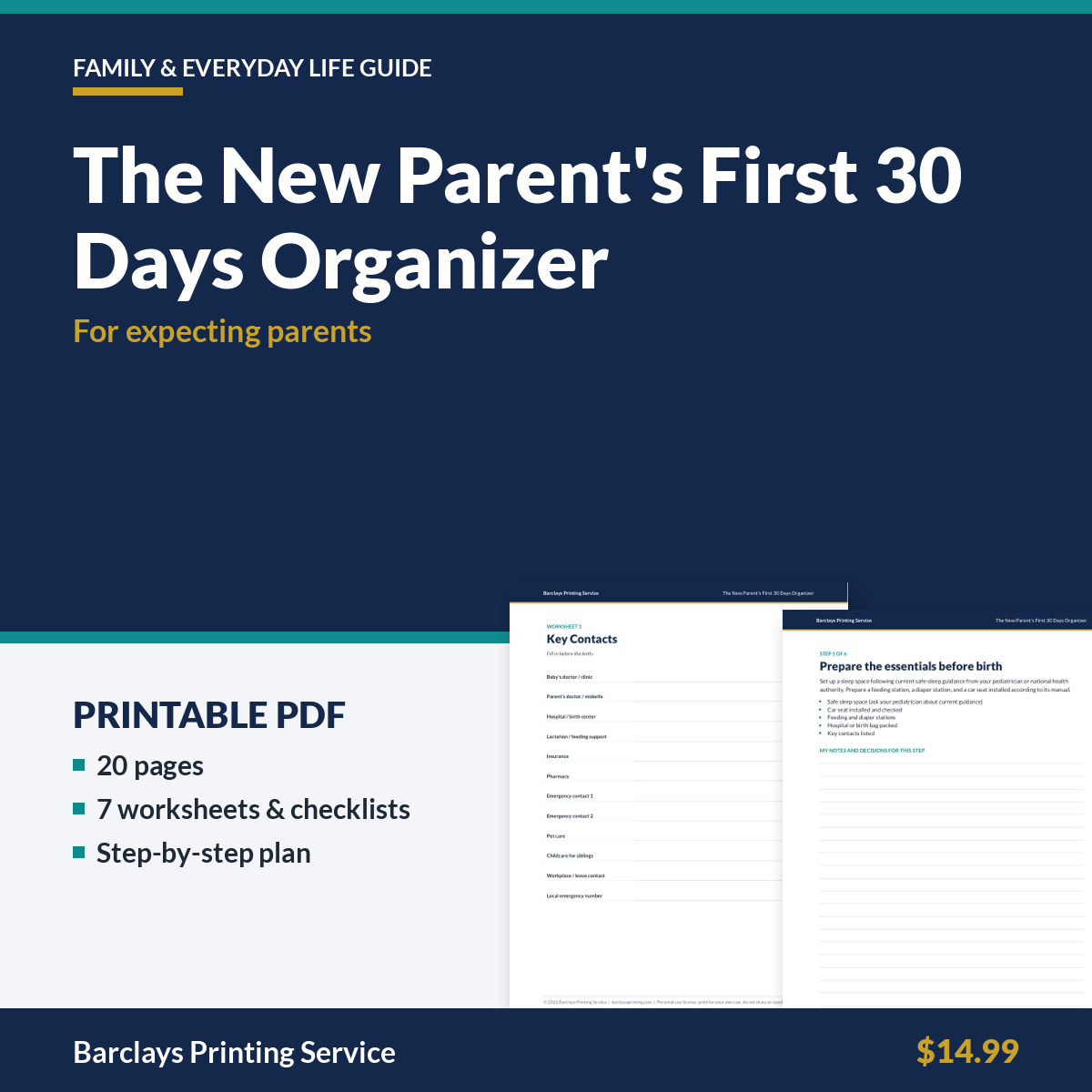
Write down every number you might need on one page and keep it somewhere obvious: the baby’s doctor or clinic, your own doctor or midwife, the hospital or birth center, lactation or feeding support, insurance, your pharmacy, two emergency contacts, pet care, childcare for older siblings, your workplace or leave contact, and your local emergency number. At 3 a.m., you won’t want to search through your phone.
Step 2: Build Your Support Team
People want to help, but “let me know if you need anything” rarely turns into actual help. A list of specific tasks makes it easy for someone to say yes. Think about who can cover:
- Meals
- Errands and groceries
- Childcare for older siblings
- Pet care
- Being someone you can call at night if you need support
For each helper, write down the task, the days or times, their contact details and whether they’ve confirmed. Share the list before the birth so nobody has to organize it while you’re recovering.
Step 3: Track Feeds, Diapers and Sleep
Your baby’s care providers may ask about feeding, wet and dirty diapers, and sleep, especially in the first weeks. When you’re exhausted, it’s hard to answer those questions accurately from memory. A simple log fixes that. Record:
- Feeding time, plus length or amount (and side, if breastfeeding)
- Wet and dirty diapers
- Sleep periods: when sleep started, when the baby woke and the total
- Anything unusual you want to mention to the doctor
A paper log on the feeding station works well because whoever is on duty can fill it in without unlocking a phone or learning an app. Print one page per day in the first week. The log is for record-keeping. If something worries you, contact your baby’s doctor rather than waiting to spot a pattern.
Step 4: Organize Appointments and Questions
In the first month there are appointments for the baby and for the parent who gave birth, plus instructions that are easy to lose track of. Keep them all in one place:
- Baby’s doctor: dates, weight checks and instructions.
- Parent’s provider: postpartum visits and instructions.
- Lactation or feeding support: advice and follow-ups.
- Insurance: calls and reference numbers.
Write questions down as soon as they come up, then take your organizer to every visit. It’s much easier to get answers when your questions are already written down than when you’re trying to remember them in a short appointment.
Step 5: Plan Meals, Visitors and Rest
Food, visitors and rest all go more smoothly with a plan made in advance:
- Stock easy meals and snacks before the birth, including freezer meals.
- Share visitor guidelines in advance, such as short visits, handwashing and no visits when someone is sick. Agreeing on them ahead of time means nobody has to have an awkward conversation at the door.
- Plan rest shifts between parents or helpers so everyone gets some sleep.
- Ask for help with laundry and dishes, which pile up fast.
Step 6: Look After the Parents
It’s easy for parents to put their own needs last, but recovery and emotional health matter too. A short daily check-in helps: a few words on how you’re feeling today, what helped, what you need and any questions for your provider. Keep recovery notes to share at postpartum visits, keep your support contacts handy and notice small daily wins.
If you or your partner feel overwhelmed, hopeless or unable to cope, contact your health provider promptly. In an emergency, call your local emergency number.
Common Mistakes to Avoid
- Leaving setup until after the birth.
- Not asking for specific help.
- Relying on memory for feeds and diapers.
- No visitor guidelines.
- Ignoring the parents’ own wellbeing.
A new baby also means new paperwork, such as a birth certificate and insurance updates. When you’re ready, our guide to organizing important family documents helps you keep everything in one system.
Get the Printable New Parent Organizer
Our New Parent’s First 30 Days Organizer is a 20-page printable PDF for expecting parents, priced at $14.99. It includes a Key Contacts page, a Before-Baby Preparation Checklist, a Support Team Plan, a Daily Feeding and Diaper Log, a Sleep Log, an Appointments and Questions page and a Parent Check-In, plus a personal action plan. It’s an instant digital download you can print as many times as you need for your household. It is a record-keeping tool, not medical advice, and no specific outcome is promised.