
Most parents leave a babysitter the same way: a quick list of instructions at the door, a phone number on a sticky note and a promise to “call if anything comes up.” That works right up until something unexpected happens. An allergic reaction, a fall on the stairs or a power cut can leave a sitter searching drawers for a flashlight or calling a parent who is in a movie theater with their phone on silent.
An emergency babysitter information kit fixes that. It’s a short set of filled-in pages that lets any caregiver, whether a teenage sitter, a grandparent, a nanny or a neighbor, find the essentials in seconds. It also means everyone who looks after your children gets the same information, every time. This post walks parents through six steps to build one.
Please note: this post and the guide it’s based on help you keep records. They are not medical advice and do not replace first-aid training. Always follow the guidance of qualified health professionals, and call your local emergency number in an emergency.
Step 1: Gather Emergency Information
Start with what a caregiver would need if something went wrong. This page goes at the very front of the kit:
- Parent contacts and where you’ll be: both parents’ phone numbers, plus a line you update each time for “where we are tonight.”
- Two backup adults: people the sitter can call if neither parent answers. One backup isn’t enough; they may be busy too.
- Your local emergency number. It seems obvious, but a visiting relative from another country may not know it.
- The home address to give responders. A sitter who has only been dropped off a few times may not know your full address, and stress makes it harder to remember.
- The nearest hospital and urgent care, and the poison control number for your country.
- Your children’s doctor.
Step 2: Record Each Child’s Health Information
Give every child their own page. On it, list:
- Name and age
- Allergies and what a reaction looks like
- Medications, with dosing instructions exactly as the prescriber gave them
- Any conditions and the action plan for them
- A “what to do if…” section for situations specific to that child
- Doctor details, and insurance information if you’re comfortable sharing it
- Comfort tips that help that child calm down
Include Action Plans From the Doctor
If a child has an emergency action plan from a doctor, for example for severe allergies, put a copy in the kit. A missing allergy action plan is one of the most common gaps, and it’s the one a sitter would need most urgently. Copy the plan as written rather than summarizing it in your own words.
Step 3: Write Routines and Rules
Not every page is about emergencies. Caregivers do much better when they know what a normal day looks like, and children are calmer when the routine stays familiar. Write down:
- Meals and the snacks that are allowed
- Nap and bedtime routines, including the order things happen in
- Screen time and rules
- Comfort items and calming tips
A simple timeline works well: wake, breakfast, morning, snack, lunch, nap, afternoon, snack, dinner, bath, bedtime routine and lights out, with a notes column for anything specific. A sitter who knows that bedtime starts with a bath and two books has a much easier evening than one who’s guessing.
Step 4: Explain the House
Your home is second nature to you and unfamiliar to a caregiver. Show them where safety items are and how things work, and write it down so they don’t have to remember the tour:
- First-aid kit and flashlight
- Fire extinguisher and exits
- Spare key, door locks and alarm instructions
- Circuit breaker and water shut-off
- Wi-Fi details
- Pets and their care
A simple “item and where it is” table is enough. If the power goes out, “flashlight: top drawer left of the stove” is exactly the information a sitter needs.
Step 5: Give Permissions and Limits
Many awkward situations come from things nobody discussed. Write down what caregivers may and may not do, so they don’t have to make a judgment call or interrupt your evening:
- Visitors: allowed or not?
- Leaving the home: walks, the park or other outings.
- Driving: only if car seats are installed, and only if you’ve agreed to it.
- Medication: whether the caregiver may give medication as written in the kit.
- Photos and social media: for example, photos for parents only and no posting online.
Ticking “allowed” or “not allowed” for each item takes a couple of minutes and avoids a lot of misunderstandings.
Step 6: Brief, Store and Update
A kit only works if the caregiver knows it exists and can find it. Walk each new caregiver through it in person before you leave. A short briefing checklist keeps that walk-through consistent:
- Kit location shown
- Emergency contacts reviewed
- Allergies and medications explained
- Safety items located
- Routine reviewed
- Permissions discussed
- Your return time and a check-in plan
Keep It in a Consistent Place
Store the kit somewhere predictable, such as on the fridge or in a kitchen drawer, and keep it there. A kit kept somewhere the sitter can’t find is no help at all. Review it every few months and after any health change, and remove outdated information, especially old medication details.
One more tip: keep highly sensitive details, such as ID numbers, out of the kit unless they’re truly needed. The kit is meant to be seen by several people, so share only what a caregiver actually needs.
Common Mistakes to Avoid
- Relying on verbal instructions at the door.
- No backup adult listed.
- Missing allergy action plans.
- Keeping the kit somewhere the sitter can’t find.
- Outdated medication information.
If you’re expecting a baby, the New Parent’s First 30 Days Organizer post helps you prepare for the first month. And because the kit lives alongside your other household records, our post on how to organize important family documents shows how to keep the rest of your paperwork just as easy to find.
Get the Printable Babysitter Information Kit
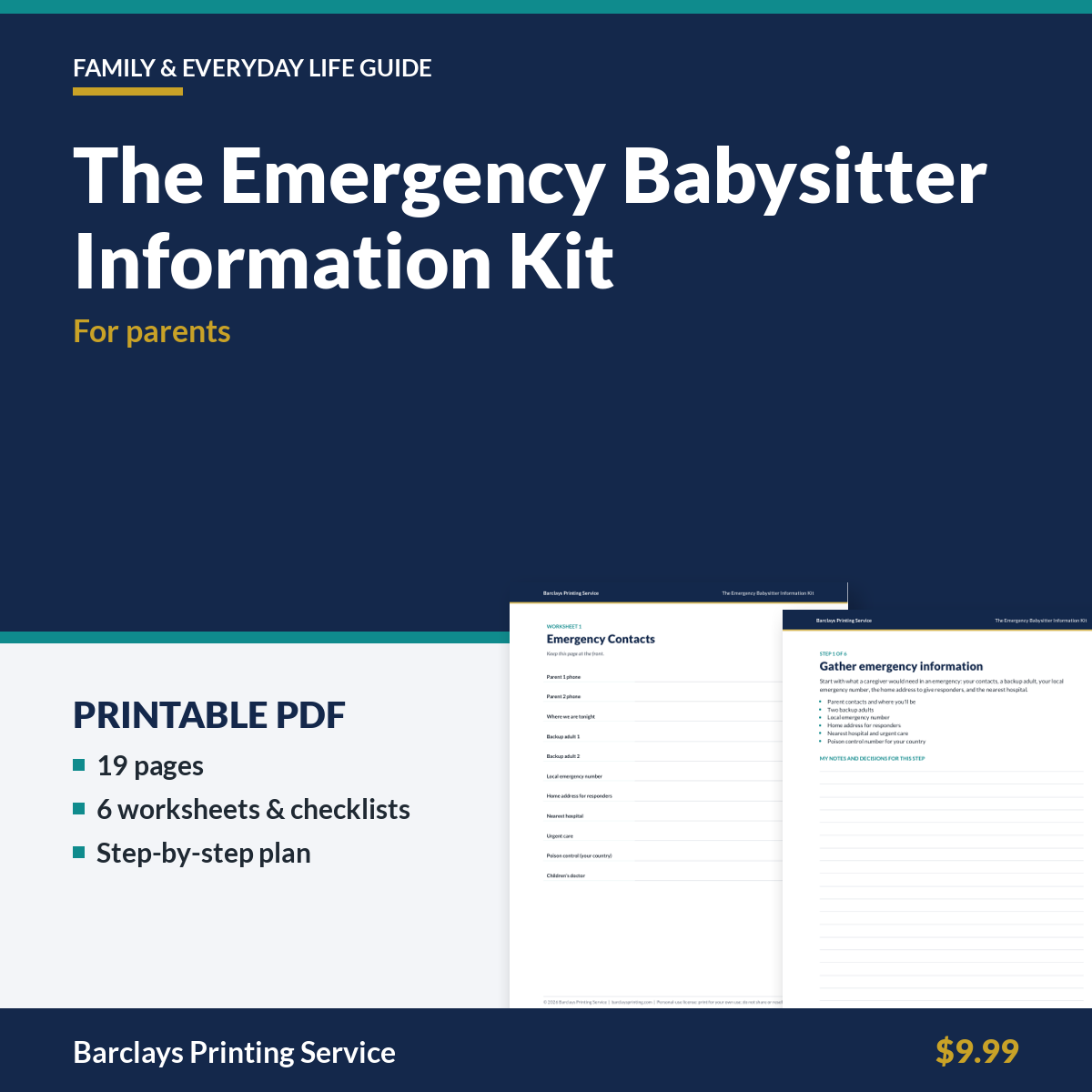
Our Emergency Babysitter Information Kit is a 19-page printable PDF for parents, priced at $9.99. It includes Emergency Contacts, Child Health Profile, Daily Routine and House Information worksheets, a Permissions and Rules checklist and a Caregiver Briefing Checklist, plus a personal action plan. It’s an instant digital download you can print as many times as you need for your household. It helps you keep records; it is not medical advice, and no specific outcome is promised.