
Setting up your first short-term rental is a project with a lot of moving parts. There are rules to check, furniture to buy, safety gear to install, photos to take, cleaning to plan and messages to write, and many of those tasks depend on each other. It’s easy to spend weeks on décor and then discover a permit you need, or to go live and realize you have one set of sheets and a guest arriving the same day the last one leaves.
A checklist system keeps it organized, so you can always see what’s done, what’s waiting and what still needs a decision. This post breaks the first-time Airbnb host setup into six phases, each with its own checklist, so new hosts can work through it in order. Platform features and fees change, so check your platform’s own help pages for current details.
Important: this is general information, not legal, tax or real-estate advice. Landlord, zoning, licensing, insurance and tax rules differ by location. Check with your local authority and qualified professionals before acting.
Phase 1: Rules, Insurance and Money
Start by confirming you can legally host and that you’re covered. Everything else depends on this.
- Research local short-term rental rules, permits and registration
- Understand any lodging or occupancy taxes
- Get HOA or lease permission where it applies
- Talk to your insurer about short-term rental coverage, and get the answer in writing
- Set up a separate account or ledger for rental income and expenses
The separate ledger is easy to put off, but it pays off quickly. When every setup cost and every booking goes through one place, you can see exactly what the rental costs to run and what it earns, instead of untangling it from household spending at tax time.
Phase 2: Furnish and Equip
Furnish for durability and easy cleaning rather than for looks alone. Pieces that wipe down, wash easily and hold up to frequent use will save you time on every turnover.
- Beds with mattress protectors and two to three linen sets per bed
- Two sets of towels per guest
- Basic kitchen equipment for simple meals
- A work desk and fast Wi-Fi if you expect traveling workers
- Blackout shades in bedrooms
- Luggage space, hangers, an iron and a hair dryer
Track every purchase against a setup budget as you go, with categories such as furniture, bedding and towels, kitchen, electronics and Wi-Fi, safety, décor, cleaning supplies, guest supplies, photos, permits and fees, and insurance. Comparing budget to actual in each category shows you early if one area is quietly eating the rest.
Phase 3: Safety and Access
Guests should be safe and able to get in without stress.
- Smoke and carbon monoxide alarms, tested
- A fire extinguisher and first-aid kit
- Emergency information and exits posted
- A smart lock or lockbox, with a backup entry method
- Exterior lighting
The backup entry method is one of the most common gaps for new hosts. Batteries die and codes get mistyped, so decide in advance how a guest gets in if the main method fails. Disclose any security devices as your platform and local law require, and never place cameras in private spaces.
Print what guests need to see
Posted emergency information, a clear exit map, a Wi-Fi card and a short house rules sign are all easier to read on paper than buried in a phone message. Clean, printed signs also make the space look cared for.
Phase 4: Photos and Listing
Clean, staged, well-lit photos and an accurate description set expectations. The goal is for guests to arrive and find exactly what they expected.
- Photos taken in daylight, covering every room
- An accurate amenities list
- An honest description of the space and neighborhood, including downsides such as stairs or street noise
- House rules and check-in and check-out times
- Your chosen cancellation policy and your pricing
It can be tempting to leave out the steep stairs or the busy street. Don’t. Photos and descriptions that oversell the space lead to disappointed guests, and guests who knew about a downside in advance rarely hold it against you.
Phase 5: Cleaning and Supplies
Decide who cleans and how before the first booking, not after.
- Hire a cleaner or plan your own cleaning schedule
- Print a turnover checklist so every clean covers the same steps
- Stock a supply closet with backups
- Post a restock list
- Plan how linens get laundered between stays
A par list keeps supplies under control. For each item, such as toilet paper, paper towels, hand soap, shampoo and conditioner, body wash, dish soap, dishwasher pods, laundry detergent, trash bags, coffee and tea, sugar and creamer and cleaning spray, write the amount you put out per stay, the backup stock you keep and the level at which you reorder. Nobody wants to run to the store between a checkout and a check-in.
Phase 6: Guest Communication and Launch
Write your message templates before your first booking arrives:
- Booking confirmation
- Pre-arrival message with check-in details
- Mid-stay check-in
- Checkout message and review request
Put together a house manual or welcome book, test the Wi-Fi and set your calendar and availability. Then do a test stay yourself. Spending a night as a guest is the fastest way to find a missing towel hook, a confusing light switch or a lockbox that’s hard to open in the dark. Consider opening with a few nights blocked between your earliest bookings so you have time to fix issues between guests.
Plan your first week live day by day as well. Writing down what you’ll check each day keeps launch week calm instead of reactive.
Common Mistakes to Avoid
- Listing before confirming local rules and insurance
- Only one set of linens per bed
- Photos that oversell the space
- No backup entry method
- Writing guest messages after the first booking arrives
Hosting in a room of your own home instead? Our How to Prepare Your Spare Room for Paying Guests guide covers that setup, and our post on how to calculate your real business profit can help you track what the rental actually earns.
Get the Printable Host Setup Checklist
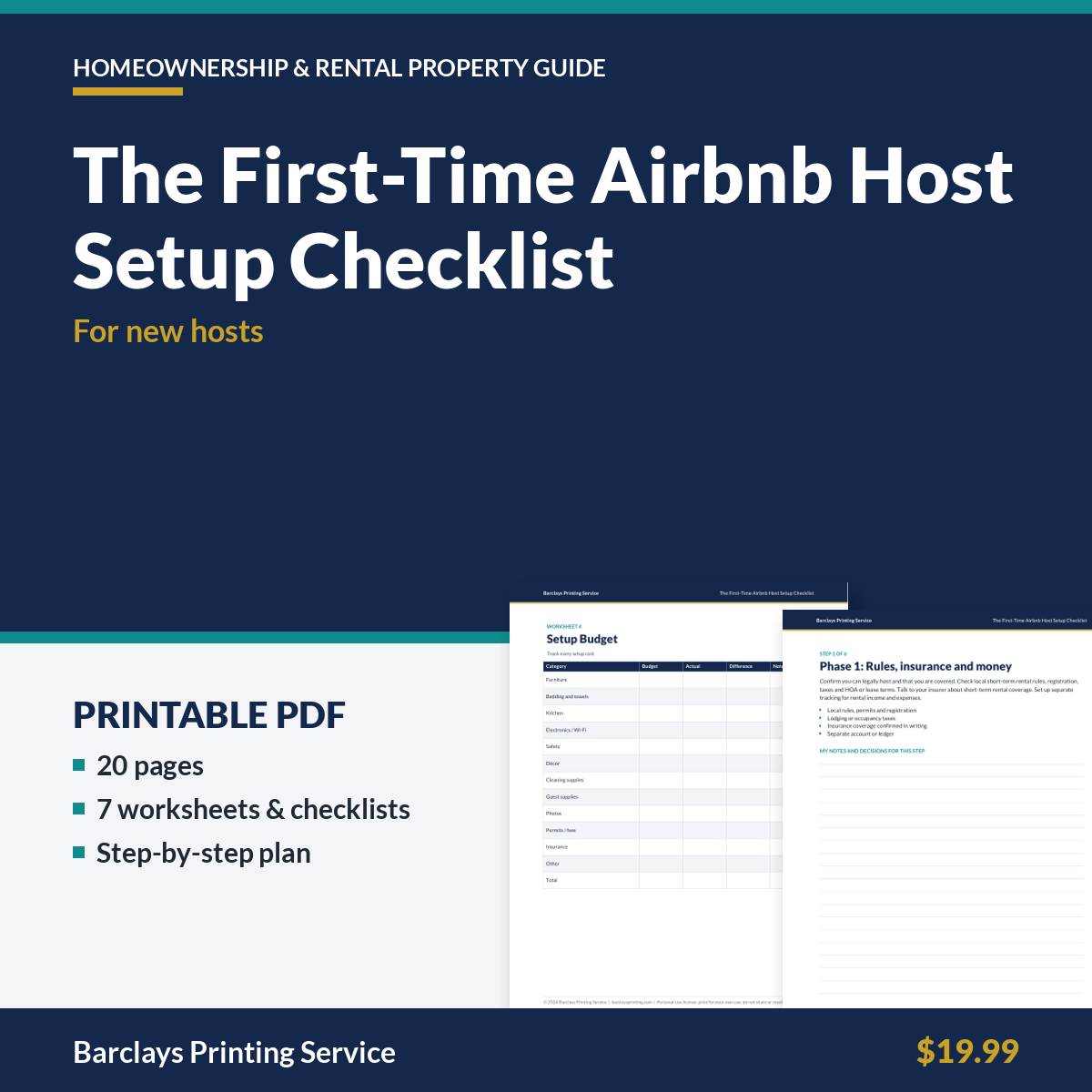
Our First-Time Airbnb Host Setup Checklist is a 20-page printable PDF for new hosts, priced at $19.99. It includes three phase checklists (Rules and Furnishing, Safety and Listing, Cleaning and Launch), a Setup Budget, a Guest Supplies Par List, Guest Message Templates, a Launch Week Plan and a personal action plan. It’s an instant digital download you can print and tick off as you go.