
Vacation rental costs tend to creep. Utilities, supplies, cleaning, laundry, repairs, software and platform fees each look manageable on their own, and then a busy month still leaves less than you expected. Cutting the wrong things can make that worse. Cheap linens, a cold house or a slow reply may save a little and then show up in reviews, rebookings and the time you spend fixing complaints.
This post walks rental hosts through a six-step way to reduce vacation rental operating costs: see where the money actually goes, work on the largest categories first and cut waste without lowering the quality guests notice.
Important: this is general information for rental hosts, not financial, tax, legal or insurance advice. Short-term rental, tax and insurance rules differ by location and by booking platform. Confirm details with your local authority, your platform and qualified professionals before making changes.
Step 1: Audit Your Last 3 to 6 Months
Lowering costs starts with seeing them. Pull bank, card and platform statements and record every expense by category. Then calculate cost per booked night, which shows what it actually costs to host each stay, not only what you spent in a calendar month. A month with few bookings can make costs look high; cost per booked night keeps the comparison honest.
- Cleaning and laundry
- Utilities and internet
- Supplies and amenities
- Repairs and maintenance
- Software, fees and subscriptions
- Insurance, taxes and licenses
Include the small recurring charges. A handful of app fees, restock orders and service plans is easy to overlook and just as easy to keep paying after you no longer use them.
Step 2: Target the Biggest Costs First
Sort the categories from largest to smallest. Savings in a big category usually matter more than squeezing a small one. Pick the top three to work on and set a realistic target for each, based on what you actually spend now, not on an ideal number you have never hit.
Cleaning, utilities and platform fees are often near the top, but your list may look different. A newer property may have lower repair costs and higher supply spending. An older one may have the reverse. Work from your audit, not from a generic ranking.
Step 3: Lower Utility and Energy Waste
Energy waste is one of the few places you can often save without taking anything away from guests. Smart thermostats, timers, LED bulbs and clear guidance in the house manual can reduce waste while the space stays comfortable. Check for leaks and running toilets, and look at appliances that use more power or water than they should.
- Set temperature limits or reset the thermostat between stays
- Use LED bulbs and timers on outdoor lights
- Fix leaks and running toilets
- Leave kind, clear energy notes in the house manual
Never make guests uncomfortable to save money. A house that is too cold in winter, or too dark and hot in summer, can cost more in reviews and lost bookings than it saves on the utility bill. The goal is less waste, not less hospitality.
Step 4: Buy Supplies Smarter
Buying whatever is on sale often leads to cupboards full of the wrong items and a last-minute run for the ones you actually need. Set par levels so you buy what each stay requires, and keep a backup quantity of the things you cannot run out of. Track use per stay so those levels stay accurate.
- Par levels per stay, so you restock to a set amount
- Bulk buy only high-turnover items
- One linen color and size system, so sets are interchangeable
- Refillable amenity dispensers, which can reduce packaging waste
Durable linens in a single color are easier to replace and harder to mismatch. Bulk buying still has a place, but only for items you know you will use before they expire or take over your storage.
Step 5: Prevent Repairs With Maintenance
Small, regular maintenance is usually cheaper than an emergency call in the middle of a stay. Schedule the work that prevents bigger problems: filter changes, gutter cleaning, appliance checks and a simple walk-through of the property.
- A quarterly maintenance walk-through
- Filters replaced on a schedule
- Small issues fixed before guests notice them
- A list of reliable tradespeople you can call
Fixing a loose handle, a slow drain or a worn gasket between stays takes less time than explaining a breakdown to a guest and arranging an urgent repair. Keep notes on what you inspected and what you deferred, so the next visit is not a fresh start.
Step 6: Review Subscriptions, Fees and Contracts
List every app, software tool and service contract, along with the renewal date. Cancel what you no longer use, compare current options for the tools you keep and ask cleaners or other vendors about package rates for regular work. Review insurance at renewal rather than letting it roll over unexamined.
This step is easy to skip because each charge looks small. Taken together, unused subscriptions and overlapping tools can add up to a category worth its own line in your audit. After you have been through the list once, a short monthly or quarterly review is enough to catch new charges before they become habit.
Common Mistakes to Avoid
- Cutting quality guests notice first
- Ignoring cost per booked night
- Buying supplies in bulk without par levels
- Waiting for repairs to become emergencies
- Forgetting small recurring subscriptions
If you also want a clearer picture of what the property earns after every cost, including your own time, see our post on how to calculate your real business profit. Cleaning is often one of the largest operating costs; our 30-Minute Guest Turnover System guide is a practical next step for making those cleans more consistent.
Get the Printable Cost-Cutting Guide
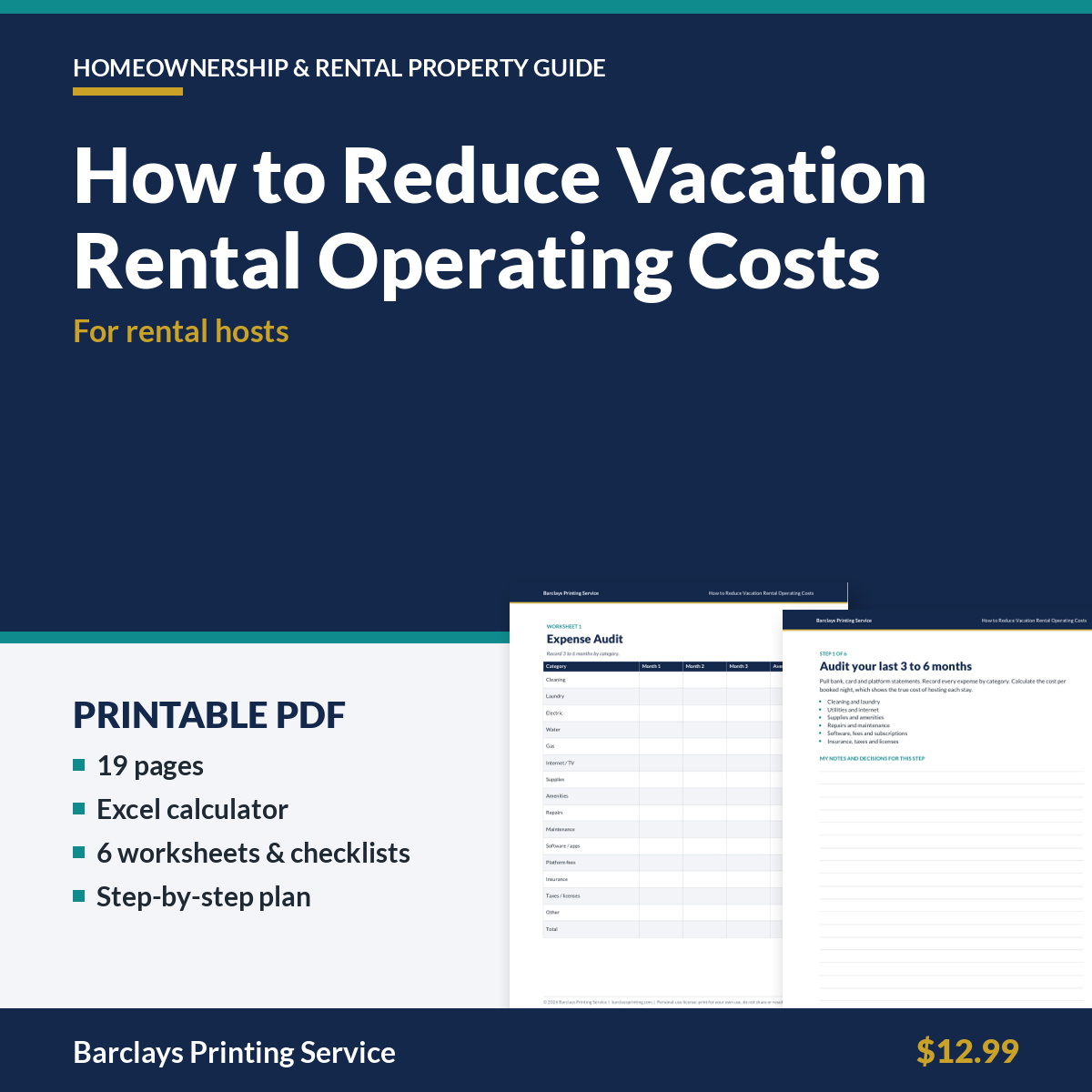
Our How to Reduce Vacation Rental Operating Costs guide is a 19-page printable PDF for rental hosts, priced at $12.99. It includes an Expense Audit, a Cost per Booked Night worksheet, a Savings Action Plan, a Supply Par Levels sheet, a Maintenance Schedule and a Subscriptions and Contracts Review, plus a personal action plan and an Excel calculator. It’s an instant digital download you can print and fill in as you review your costs.